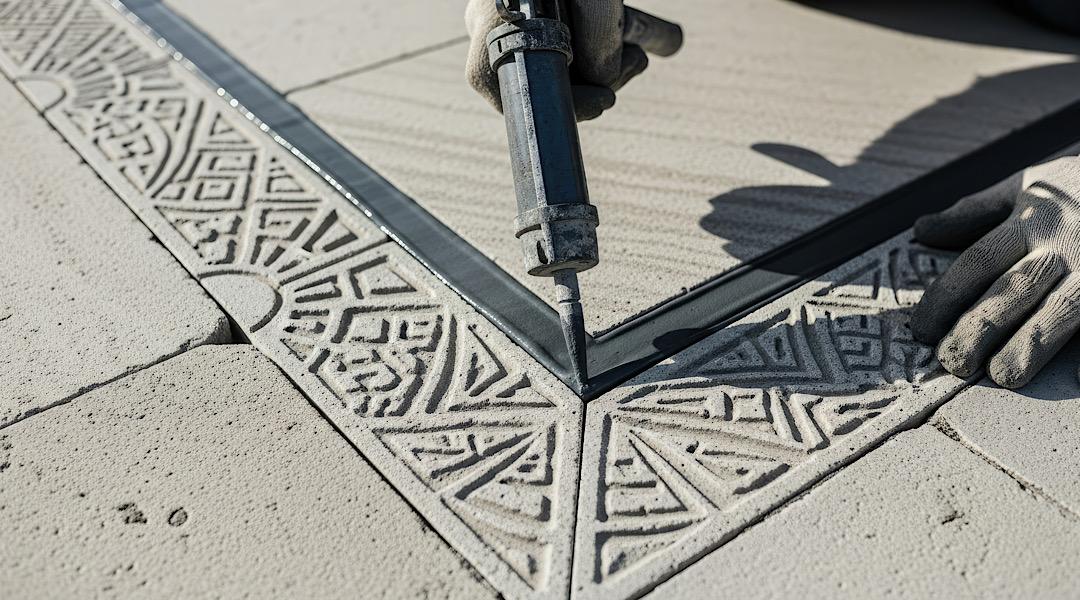
A practical, Denver-specific guide to sealing patio joints the right way
Denver patios deal with big temperature swings, dry spells followed by heavy rain, and plenty of freeze-thaw action in shoulder seasons. That combination makes patio joints (and cracks) more than a cosmetic issue—joints are pathways for water to reach the base under your slab. When that base gets saturated, it can wash out, shrink, or settle, leaving your patio uneven over time. Good joint sealing is one of the simplest maintenance steps homeowners can take to reduce moisture intrusion and protect the work you’ve already invested in.
Why this matters: Water gets into joints and small gaps, then expands when it freezes. Over repeated cycles, openings can widen and the soil under the slab can be disturbed—two common contributors to cracking, surface damage, and settlement in Colorado conditions.
What counts as a “patio joint” (and what you should seal)
Not every line in concrete is a crack. Many patios have intentional joints that allow movement. Sealing the right locations helps keep water and debris out while still allowing the slab to expand and contract.
Common patio joint locations worth inspecting:
• Control joints (tooled or saw-cut lines intended to manage cracking)
• Expansion/isolation joints (often where patio meets the house, steps, columns, or another slab)
• Wide cracks that open/close seasonally (movement cracks)
• Slab edges where water consistently runs in (especially near downspouts)
How joint sealing helps prevent patio settlement
Patio settlement often starts below the slab. When water repeatedly enters through joints, it can soften or move supporting soils (especially in areas with poor drainage, roof runoff, or irrigation overspray). Over time, voids can form and the slab begins to drop. Sealing joints won’t “fix” an already-sunken patio by itself, but it can reduce the moisture cycling that leads to base instability—an important step for long-term performance in freeze-thaw climates.
If your patio is already uneven: consider stabilizing and lifting it first (so water doesn’t keep migrating into the same low spots), then seal joints after the surface is restored.
Sealant options: what works best for Denver patios?
The “best” product depends on the joint type, whether the joint is horizontal, and how much movement you expect. For many exterior concrete joints, elastomeric sealants that meet performance standards used in building construction are commonly selected because they flex with movement instead of cracking out.
Option
Best for
Notes for Denver
Polyurethane joint sealant (often self-leveling for flat joints)
Horizontal patio joints, joints that need flexibility
Good movement capability; pair with backer rod to avoid “three-sided” adhesion and to control depth.
Silicone (construction-grade)
Some isolation joints; certain tricky exposure areas
Can be very durable, but product selection and surface prep matter; confirm compatibility with concrete and adjacent materials.
Rigid crack fillers / patch materials
Static cracks with minimal movement
Less forgiving in freeze-thaw if the crack moves; not ideal for joints designed to move.
Backer rod (not a sealant—joint prep)
Deep joints and wide gaps
Creates the right sealant shape, reduces material use, and helps prevent failure from bonding on three sides.
Pro spec tip: Many commercial-grade joint sealants are evaluated under ASTM standards for elastomeric joint sealants (often referenced as ASTM C920). If you’re comparing products, this spec language can be a useful quality filter—then confirm the sealant is intended for exterior concrete joints and the joint movement you have.
Quick “Did you know?” facts for Denver homeowners
Freeze-thaw isn’t just “winter.” In Denver, temperature swings around freezing can happen in spring and fall, increasing opportunities for water in joints to freeze and expand.
Downspouts are a top contributor to washout. If roof runoff discharges next to a patio corner, it can saturate subgrade soils and accelerate settlement—sealed joints + better drainage is a strong combo.
Joint prep matters as much as the sealant. Even premium sealants can fail early if the joint is dirty, damp, or too deep for the bead shape to flex properly.
Step-by-step: a clean, durable patio joint sealing process
This process is designed for typical exterior concrete patio joints and larger cracks. Always follow the specific manufacturer instructions for the product you choose—those directions control cure time, temperature range, and primer requirements.
1) Identify the joint type (movement joint vs. static crack)
If the gap changes width seasonally, it’s moving. Movement joints need a flexible sealant system. If it’s a hairline crack with no movement, you may be able to use a different repair approach—but for most exterior joints, flexibility is your friend in Denver.
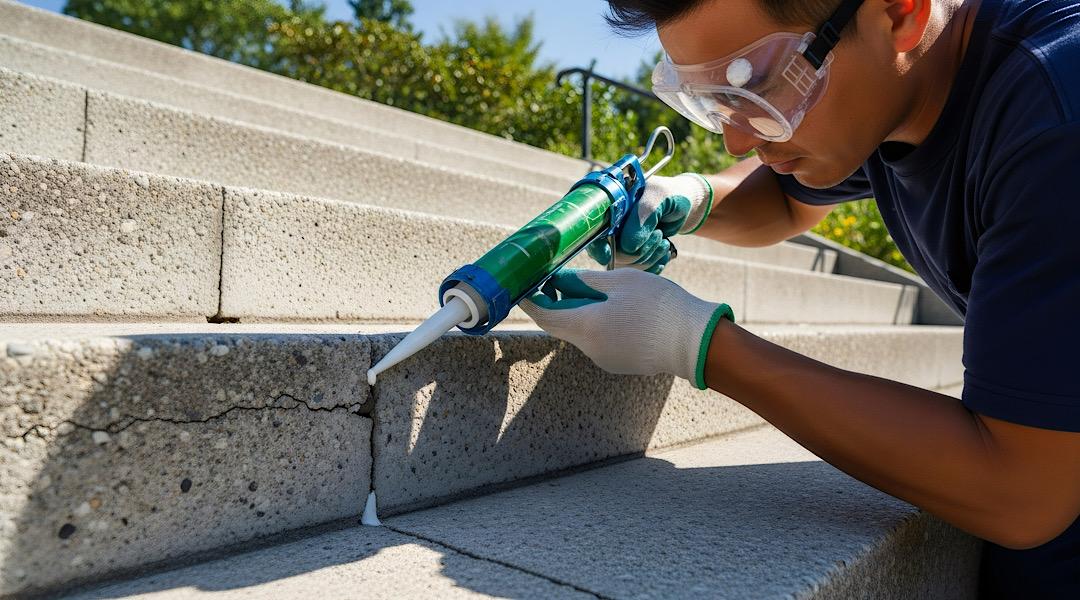
2) Clean the joint thoroughly
Remove weeds, old caulk, loose concrete, and packed dirt. A clean joint lets the sealant bond to the joint walls (where it’s supposed to bond). If the joint edges are crumbling, address that first—otherwise you’re bonding to weak material.
3) Control depth with backer rod (when needed)
For deeper joints, install backer rod to set the sealant depth and support a flexible “hourglass” shape. This also helps prevent the sealant from bonding to the bottom of the joint, which can cause early failure when the slab moves.
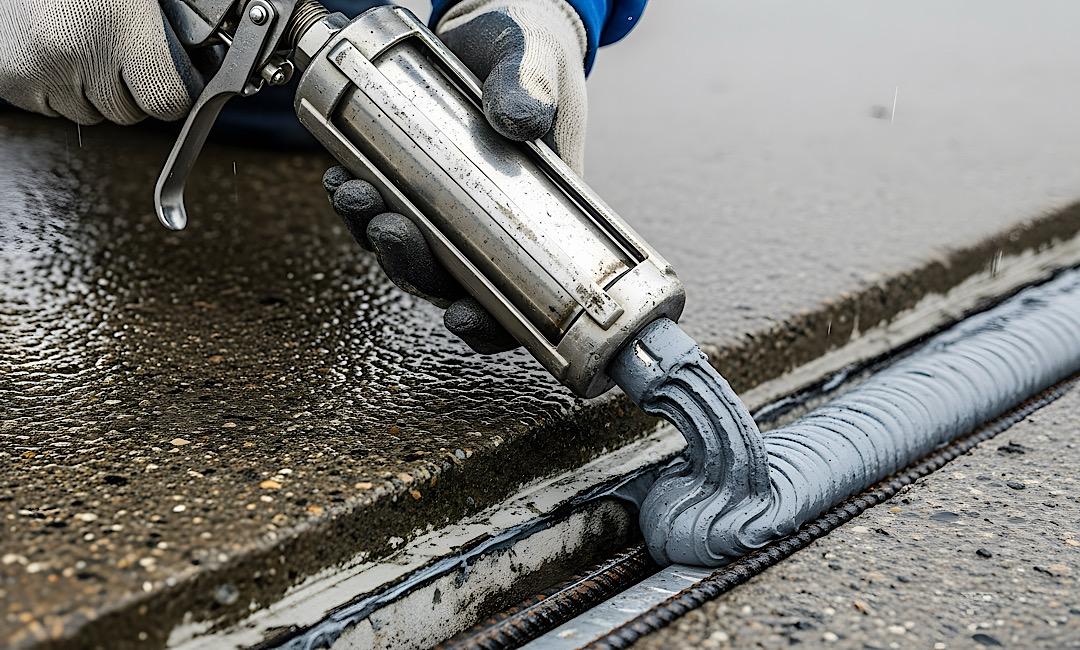
4) Apply sealant under the right conditions
Temperature and moisture matter. If rain is forecast or the joint is damp, postpone. Many products also have minimum temperature requirements for proper curing—important in Denver when mornings are cold and afternoons warm up fast.
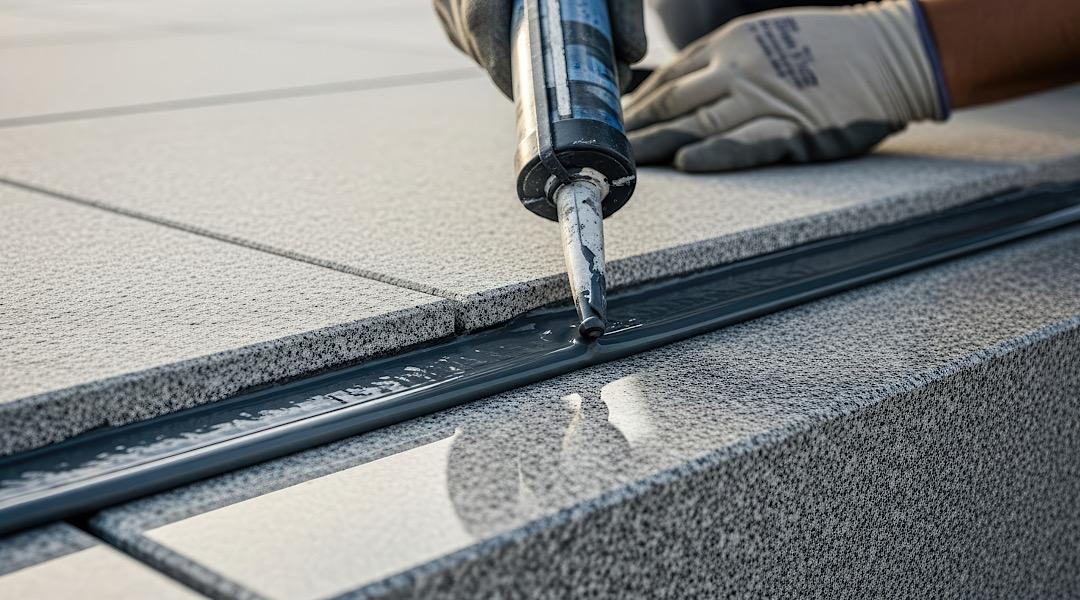
5) Tool or finish for a clean look (and better performance)
A neat finish isn’t just aesthetic—it helps reduce thin spots and ensures consistent contact with both joint walls. Keep foot traffic off until fully cured.
When to call a pro
If your patio has a vertical “lip” (trip edge), visible voids along the slab edge, or water that always pools in the same low area, sealing alone won’t solve it. That’s when slab stabilization and lifting may be the more durable fix—then sealing becomes the finishing step.
Denver-specific checklist: reduce water at the source
Joint sealing works best alongside basic drainage control. Here’s a simple, local checklist that prevents “repeat offenders” from overwhelming your joints:
• Extend downspouts so roof runoff discharges away from slab edges
• Adjust sprinklers to avoid soaking patio joints daily
• Watch for persistent pooling (a sign your slab may already be low)
• After heavy storms, check for soil erosion at the patio perimeter
Design-minded note (for homeowners who care about finishes): A clean, consistent joint line can make a patio look more “intentional,” especially with modern outdoor furniture layouts. If you’ve invested in the aesthetics of the space, joint sealing is a small detail that helps it stay sharp.
Schedule a patio evaluation (Denver metro)
If your patio joints are opening up, collecting water, or your slab has started to settle, AAA Concrete Raising can help you stabilize and restore the surface with minimally invasive mudjacking techniques—then you can protect the result with smart sealing and drainage habits.
FAQ: Patio joint sealing in Denver
Is patio joint sealing the same as sealing the entire patio surface?
No. Joint sealing targets the gaps (movement points) to reduce water entry into the slab system. Surface sealing is a separate product/process applied across the top face of the concrete for stain resistance and moisture reduction.
Should I seal joints before or after patio leveling (mudjacking)?
If the slab is settled, leveling first is usually smarter. Otherwise, you may seal in a problem that continues to funnel water into low spots. After the patio is lifted and stabilized, sealing helps maintain the improvement.
Do I need backer rod in every joint?
Not every joint. Backer rod is most useful when joints are deep or wide enough that you need to control sealant depth and prevent the sealant from bonding on three sides. A properly sized bead is a big part of long-term performance.
What’s a sign that water is getting under my patio?
Watch for soil washing out at slab edges, persistent pooling, sudden changes in slope, rocking along an edge, or new gaps opening near the house or steps. If you suspect voids, void fill can stabilize the base before damage spreads.
Can I seal joints in cold weather?
Possibly, but it depends on the product’s minimum application temperature and whether the joint is dry. In Denver, mornings can be below a product’s range even if afternoons feel warm. If you’re unsure, schedule the work for a stable-weather window.
Glossary
Backer rod: A compressible foam rod inserted into a joint before sealant. It controls sealant depth and helps the sealant stretch properly as the concrete moves.
Control joint: A planned weakened line (tooled or saw-cut) that encourages concrete to crack in a straight, less noticeable location.
Expansion/Isolation joint: A joint that separates slabs or isolates a slab from a wall/column so each element can move independently.
Freeze-thaw cycle: When water freezes (expands) and then thaws. Repeating cycles can widen openings and stress concrete near joints and cracks.
Void: An empty space under a concrete slab caused by soil washout, settlement, or consolidation. Voids can lead to cracking and uneven slabs if not addressed.