Protect the look you paid for, while fixing the slope, wobble, and trip hazards
Stamped concrete is designed to mimic stone, brick, slate, or tile, so when a patio, walkway, or front entry starts to settle, the stakes feel higher than with plain gray flatwork. The goal isn’t only “raise the slab.” It’s to restore a safe, level surface and keep the decorative finish looking intentional. At AAA Concrete Raising, we help Denver-area homeowners stabilize and lift sunken concrete using minimally invasive techniques so you can keep your existing slab whenever it’s a good candidate.
Why stamped concrete settles more often around Denver homes
In the Denver metro area, decorative slabs commonly move for the same reasons standard concrete moves, soil changes and water. The difference is that stamped surfaces make even slight elevation changes feel more noticeable (a rocking chair, a grill that won’t sit flat, a visible “lip” at a step).
Common Denver-area culprits
Expansive clay soils: Colorado’s swelling clays can expand with moisture and shrink as they dry, creating voids and movement under slabs, especially where drainage or irrigation changes the soil’s moisture content over time.
Freeze–thaw stress: When water gets into small cracks or joints and freezes, it expands and can worsen cracking, shifting, and unevenness, one reason Denver winters are hard on flatwork.
Erosion and washout: Downspouts, splash blocks, negative grading, or poorly directed runoff can carry away support soil, leaving hollow spots beneath stamped patios and walkways.
Base issues from the start: If the subgrade wasn’t compacted well or the base thickness varies, settling can show up years later, often first at corners, steps, and edges.
Can stamped concrete be leveled without replacing it?
Often, yes, especially when the slab is mostly intact and the problem is loss of support underneath (voids, washout, or soil consolidation). Concrete lifting (mudjacking / slabjacking) can restore elevation by filling voids and re-supporting the slab.
When leveling is usually a good fit
| Condition | What it often means |
|---|---|
| Slab is sunken but mostly in one piece | Likely a support issue under the slab, lift and stabilize may work well |
| Trip edge at a joint or control cut | Often correctable by raising the lower panel (and addressing voids) |
| Water collects where it didn’t before | Re-establishing the slope can improve drainage and help prevent future washout |
| Hollow sound / “drummy” spots | A sign of voids, void fill + lifting can restore support |
Note: If stamped concrete is severely shattered, badly heaved, or has widespread surface failure (spalling/scaling), replacement may be the more predictable option.
Step-by-step: What a careful stamped concrete lifting plan looks like
1) Identify the cause, not just the symptom
If the slab sank because soil washed out, lifting without addressing drainage can lead to repeat settling. We look for downspout discharge, low spots near the slab, irrigation overspray, and joints that are open enough to funnel water underneath.
2) Plan injection points to protect the decorative finish
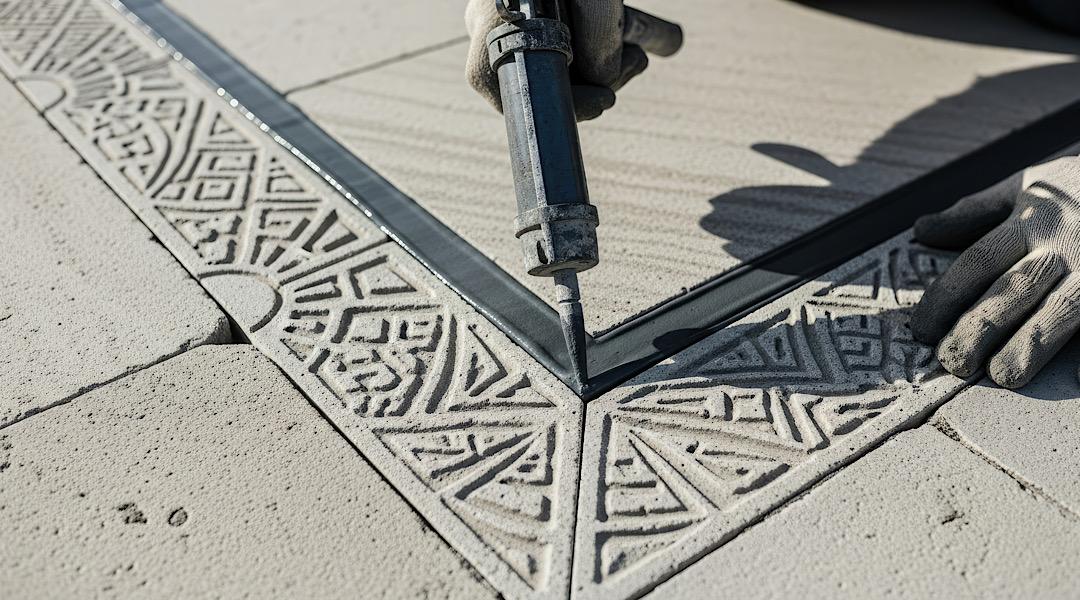
Decorative slabs require extra intention: hole placement matters for both lift control and appearance. A good plan uses the fewest practical injection points, chooses locations that patch cleanly, and lifts gradually to avoid cracking or over-lifting edges.
3) Fill voids first, then lift in controlled stages
Voids are the enemy of long-term stability. The goal is to restore continuous support beneath the slab so it behaves like a slab again, not like a bridge over empty space.
4) Patch and blend, then protect the joints
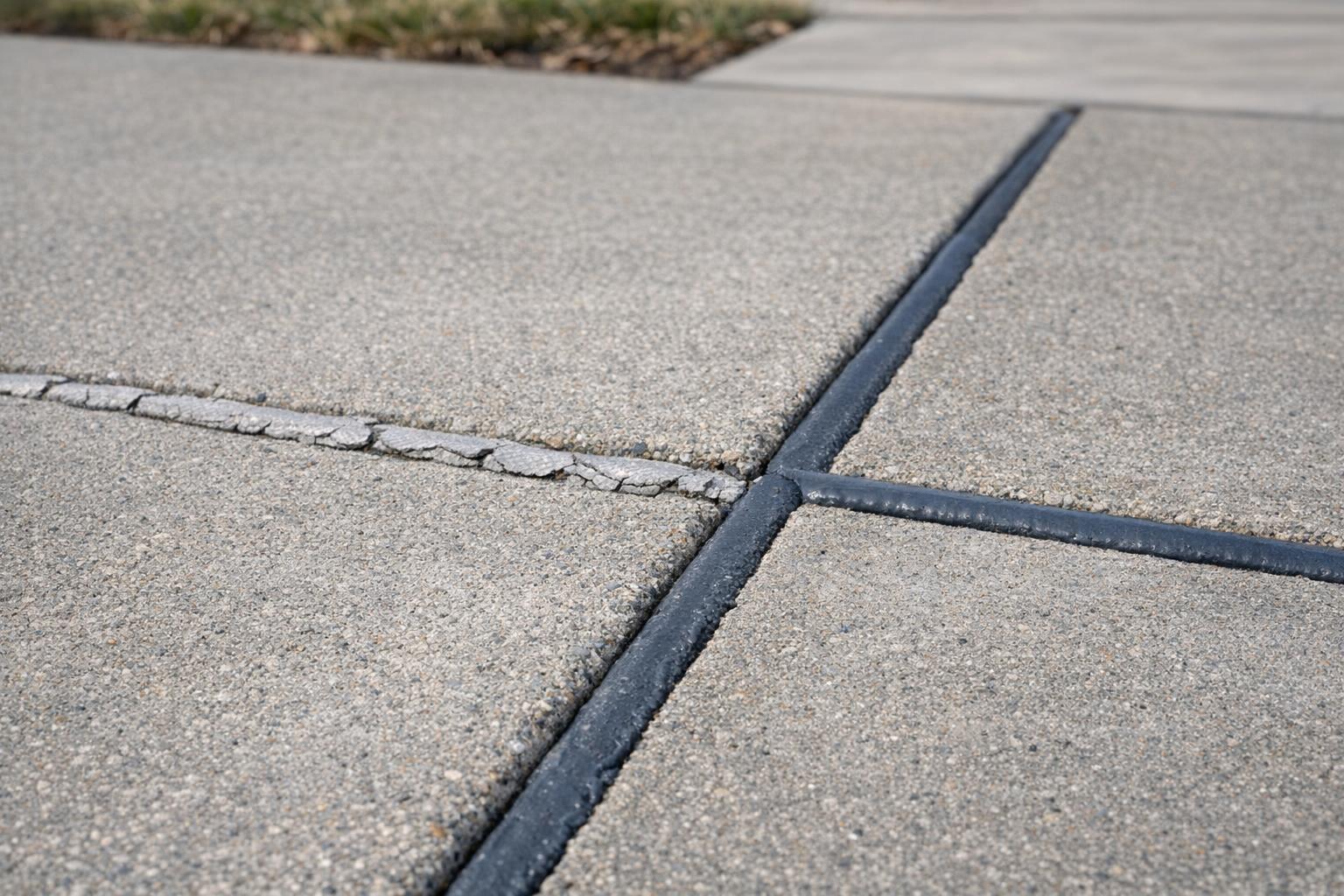
After leveling, patching should be neat and durable. For stamped concrete, many homeowners also benefit from joint sealing and proactive drainage tweaks to reduce water getting under the slab before the next winter.
Mudjacking vs. foam lifting for stamped concrete: a practical comparison
Homeowners researching stamped concrete leveling in Denver often compare mudjacking (cement-based slurry) with polyurethane foam injection. Both can lift; the best choice depends on your slab, goals, and site conditions.
| Factor | Mudjacking / Slabjacking | Polyurethane Foam Injection |
|---|---|---|
| Material weight | A heavier cement-based slurry can add load to weak soils | Lightweight foam (often cited as just a few lbs per cubic foot) |
| Hole size / visibility | Commonly, larger holes (often ~1″–2″), can be more noticeable on stamped surfaces | Often, smaller ports (commonly around 5/8″ or “dime-size,” depending on the system) |
| Moisture exposure | Some sources note that slurry can be vulnerable if water moves through unsealed joints/cracks | Foam is often described as water-resistant/hydrophobic by many providers |
| Budget | Typically lower upfront cost (varies by site and access) | Often higher upfront cost, may offer longer-term value in some scenarios |
If your top priority is keeping a stamped surface looking smooth, talk with your contractor about hole placement, patch color-match options, and how they’ll protect the stamped texture around each injection point.
Did you know? Quick facts: Denver homeowners appreciate
Colorado’s swelling clays can expand dramatically when wetted, exerting enough pressure to damage slabs and foundations.
Freeze–thaw cycles widen small cracks, water gets in, freezes, expands, and stresses the concrete from the inside.
Void filling can be the difference between a “lift” and a lasting repair, if hollow areas remain, the slab may keep moving.
Local angle: What Denver weather and soils mean for decorative patios
Denver’s combination of expansive soils and frequent temperature swings makes “small” concrete issues grow legs. A stamped patio that’s merely out of level in September can become a winter water-collection point, then crack, spall, or settle further when freeze–thaw cycles repeatedly stress the slab and the subgrade.
Simple prevention checklist for stamped concrete owners
Direct water away: Extend downspouts and correct low spots so runoff doesn’t feed voids under the slab.
Seal joints and cracks: Keeping water out reduces freeze-driven widening and subgrade erosion.
Watch the edges: Corners and steps show movement first, early leveling can prevent bigger repairs later.
Get a professional opinion on stamped concrete leveling in Denver
If your stamped patio, walkway, or front entry is sinking, the smartest next step is a site-specific assessment: what moved, why it moved, and whether lifting + void fill can restore support without compromising the decorative finish.
Request a Quote / Schedule an Inspection Get a Free Mudjacking EstimateRelated services: Patio leveling, sidewalk & walkway leveling, driveway leveling, and void fill.
FAQ: Stamped concrete leveling (Denver)
Will leveling ruin the stamped pattern?
The pattern itself isn’t “re-stamped,” but injection points do require patching. A careful contractor plans hole locations and patching so the finished look is as discreet as possible, especially on high-visibility patio areas.
What’s the difference between void fill and leveling?
Void fill focuses on restoring support under the slab (filling hollow spaces). Leveling uses controlled pressure to raise sections of concrete back toward the desired elevation and slope. Many durable repairs combine both.
Is mudjacking “good enough” for decorative stamped concrete?
It can be, depending on slab condition, access, and your expectations for patch visibility. Many sources note mudjacking typically uses larger holes than foam injection, which may matter more on stamped finishes.
Why did my stamped patio sink near the house?
Common reasons include downspouts dumping water near the patio, soil shrinkage/swell cycles, and erosion along the edge of the slab. Colorado’s expansive clays can intensify this movement when moisture levels change.
How do I reduce the chance it settles again?
Focus on water management: extend downspouts, avoid ponding, and seal cracks/joints to reduce water intrusion. Freeze–thaw can amplify small defects, so stopping water entry is a big win.
Glossary
Mudjacking (slabjacking): A concrete lifting method that pumps a cement-based slurry under a slab to fill voids and raise it.
Void: An empty space beneath concrete, often caused by soil erosion, washout, or shrinkage, where the slab no longer has continuous support.
Expansive soil: Clay-rich soil that swells when wet and shrinks when dry, contributing to concrete movement and cracking.
Freeze–thaw cycle: Repeated freezing and thawing of water in/around concrete that can widen cracks and worsen surface distress.