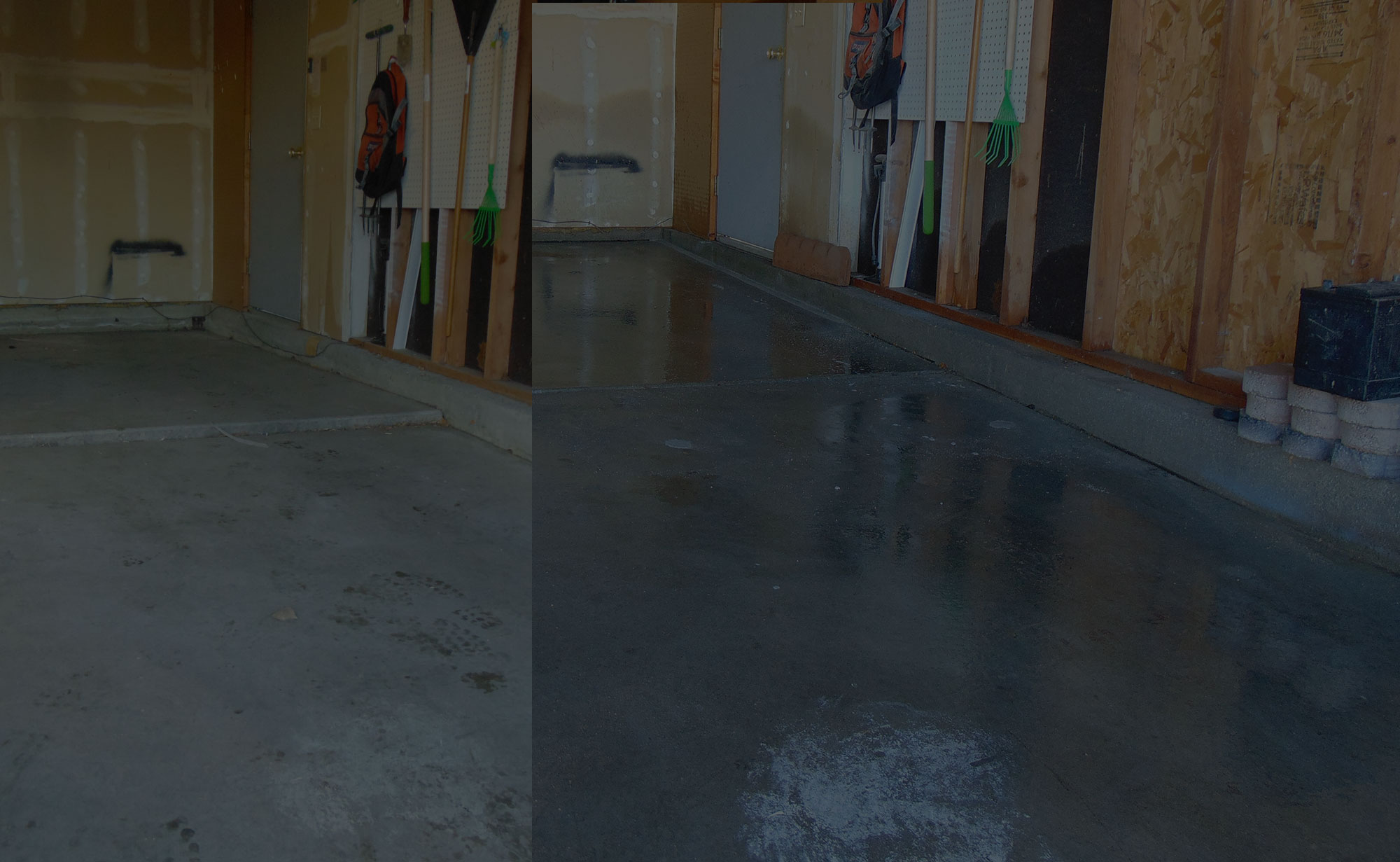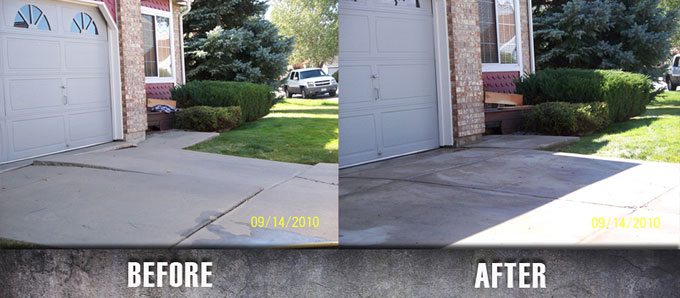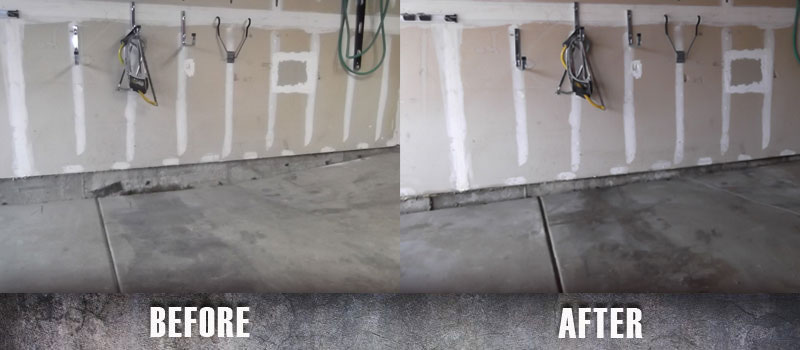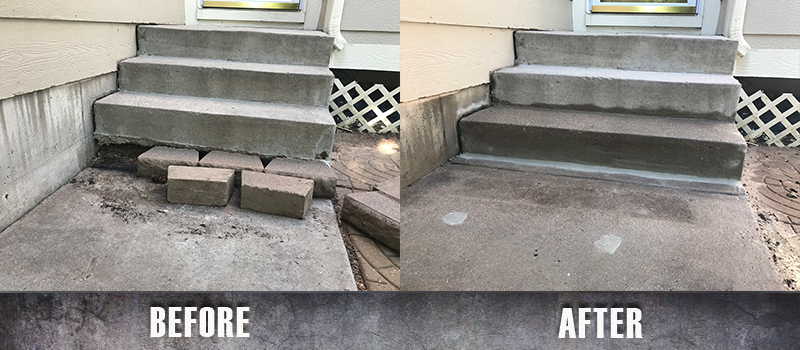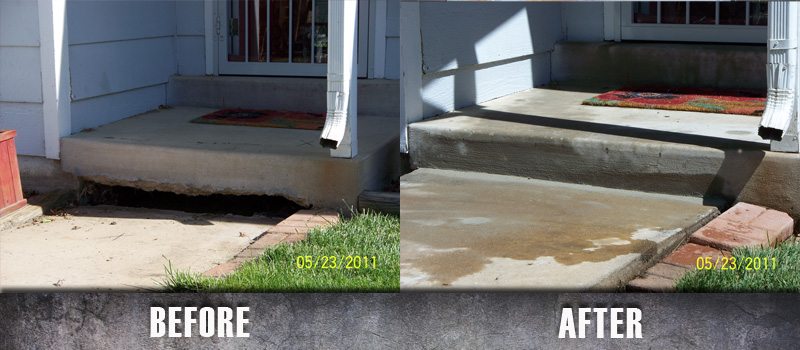
Your patio didn't fail. The corner under the downspout did.
Patio leveling is the most predictable job in concrete. After decades of lifting patios across Denver, Arvada, Lakewood, and the rest of the metro, the story is usually the same: the corner closest to the downspout went first. Roof water hits the soil at the slab edge, washes out the base a little every storm, and the patio tips toward the house or away from it.
Either direction is trouble. A patio tipped toward the house pools water against your foundation, and that's a bigger bill than any slab repair. Tipped away, it pulls the step-down at the back door past code height and puts a hinge crack through the middle. The fix is the same either way. We drill 1-1/2" holes, pump a slurry of water and sandy loam soil into the washed-out void, and bring the slab back to the grade it was poured at. No demolition, and the surface you already paid for stays.
What patio leveling costs
Trevor quotes every patio in person, free, and puts the number in writing. We don't publish price ranges because the void under the slab, not the slab on top, drives the cost, and you can't see the void from the street. As an industry yardstick, HomeAdvisor puts a typical residential mudjacking job at $300 to $2,500 or more. Tear-out and replacement lands far beyond that once demolition and haul-off are in the number, which is why lifting an intact patio is usually the smarter spend.
The estimate visit is also where the thing that decides whether the repair lasts gets checked: drainage. Fix the downspout, then lift. Extend the drain line well past the slab edge and the lift stops fighting the washout that caused it. Skip that step and the same corner starts sinking again. A downspout extension costs a fraction of a second visit from anyone.
Stamped, colored, or exposed aggregate? Still liftable.
The most common question we get on patios: what happens to the finish? Mudjacking works from underneath, so the surface stays. The pump holes are the only mark, and we patch them after the lift. Up close, on day one, you'll spot the patches. After a season of sun and foot traffic most homeowners stop noticing them. On a stamped pattern, hole placement gets extra thought: the fewest holes the lift allows, placed where the patches blend in cleanly.
Cracked patios are a judgment call, and it gets made in person. The candidate rules are the same ones we apply to every slab: the concrete needs to be intact, in good shape, and at least 24 inches wide. Concrete that's 40 to 50 years old has usually spent its service life and should be replaced instead of lifted. When a patio fails that test, we say replace it. That's not the answer every contractor gives with a truck full of material sitting at the curb. It's still the right one.
How the lift goes
- First, the holes: 1-1/2" across, normally spaced about 4 to 6 feet apart, placed where the slab needs to rise and hidden in pattern lines when we can.
- Then the pump: our pump is portable, with a short hose, brought right to the slab. That lets us batch the slurry to the exact thickness the job needs instead of whatever mix survives a long hose run from the street. The slab comes up slowly while we watch the surface, and when it sits at grade, we stop.
- Last, the patch: holes get filled flush and the site gets cleaned up. Trevor covers cure times and when the furniture goes back at the estimate, since the mix and the weather set that answer.
The slurry is water and sandy loam soil. Nothing exotic, no foam chemicals, and once cured it's hard, heavy fill that doesn't wash out the way loose soil does. If you're weighing methods, the comparison table below covers where poly foam wins and where it doesn't. For a patio on Front Range clay, it usually doesn't.
Worth doing while the truck is there
A sunken patio almost never travels alone. The same drainage that took the patio corner down is usually working on the walkway panels beside it, and sometimes the driveway out front. Trevor checks all of it during the estimate, quotes each piece separately, and you pick what gets done. Having it all looked at in one visit costs you nothing.
Winter work is possible when the weather and the ground allow it. The slurry takes longer to set in the cold, but it sets the same; solidly frozen ground is what rules a job out, and Trevor will tell you how the season affects your schedule. Browse finished patios on our work page, or read how patio leveling works in more detail on the blog. When you're ready, request the free estimate and Trevor will come measure.