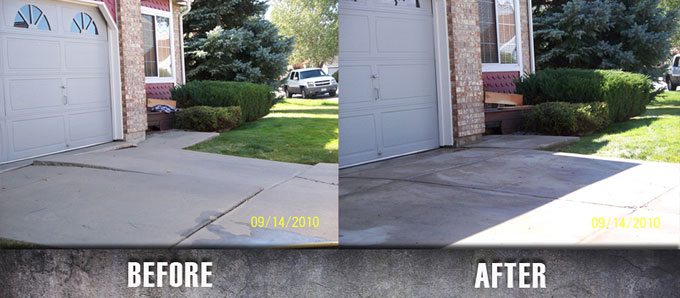
One raised sidewalk panel is a trip hazard, a citation, and a lawsuit. Pick none.
Sidewalk leveling is some of the most consequential work we do. A panel that's settled or heaved half an inch past its neighbor catches toes, and as a general rule, a vertical offset of 1/2 inch or more between slabs counts as a trip hazard. Here's the part that surprises homeowners: in Denver, property owners are generally responsible for maintaining the public sidewalk fronting their own lot, repairs included. If someone trips and gets hurt on it, the liability can land on you. Lifting is the cheap way to put the risk to rest.
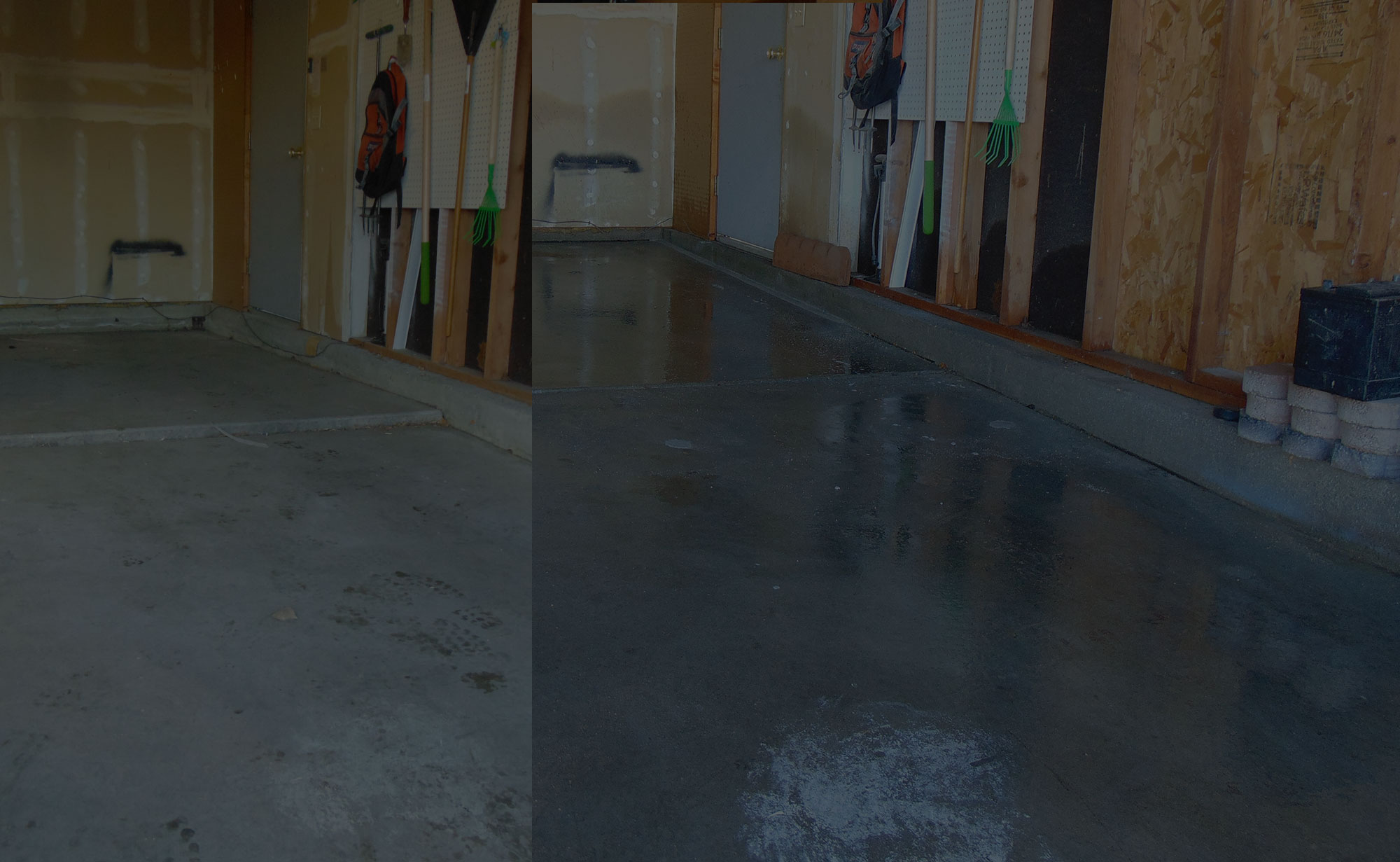
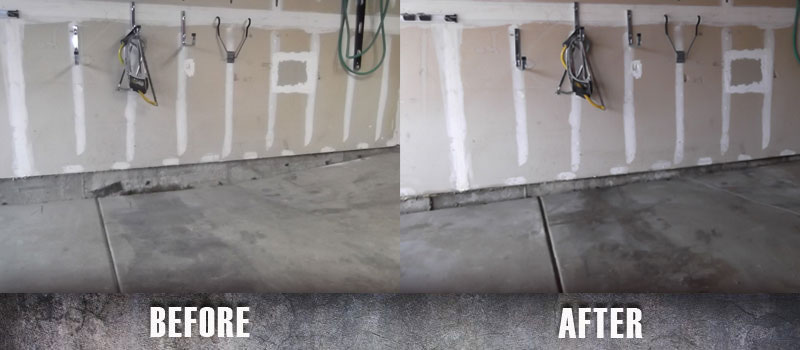
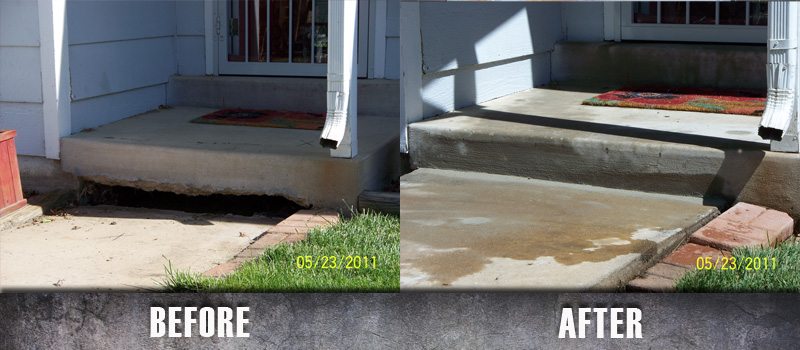
The repair itself is straightforward. We drill 1-1/2" holes in the low panel, pump a slurry of water and sandy loam soil underneath, and raise it flush with its neighbors. The offset your neighbor kept tripping on becomes a seam. The cured slurry is hard, heavy fill that doesn't wash out the way the original base did, which is why a properly lifted panel stays where we put it.
The city and the citation
If you've received an HOA letter, a city notice, or a complaint about an uneven sidewalk, we'll inspect the concrete and tell you plainly whether leveling is the right repair; check with your own city on the specifics of closing out a violation. We've been lifting Front Range sidewalks since 1988, and the sections below cover the judgment calls that come up most.
The money side favors lifting. Replacing a panel means sawcutting, demolition, haul-off, forming, and a re-pour that cures to a different color than the rest of your walk. Lifting skips all of it and the existing concrete keeps its color. Trevor quotes each panel in person, free, so you can put real numbers side by side. For an industry yardstick, HomeAdvisor puts a typical residential mudjacking job at $300 to $2,500 or more. Our longer write-up on how often sidewalks actually need replacement covers when a re-pour genuinely is the right call.
The tree root exception
One situation gets a different answer from us, and you should hear it before anyone quotes you. If a live tree root is actively pushing a panel up, lifting that panel buys you a year, maybe two, and then the root wins again. We won't take your money for that. During the estimate Trevor finds out whether the root is still growing or long dead. Dead root or old washout: we lift, and it holds. Live root: the honest options are dealing with the root or re-pouring the panel around it. A repair that fails on schedule isn't a repair. It's a subscription.
Where walkways sink, and when to deal with it
- At the curb and driveway apron, where street water undercuts the base every storm.
- Under downspouts, the same washout that takes down patios and driveway panels.
- Along the front walk to the door, where a settled panel funnels runoff toward the foundation instead of away from it.
- Anywhere the soil was trenched for utilities or sprinklers and backfilled loose.
Timing matters more than most people think. A half-inch offset in September is a snow-shovel catcher by December and a guest-trips-at-the-holidays story you don't want to tell. Fall is a busy walkway season for exactly that reason; we covered the checklist in getting entryways level before guests arrive. Winter itself doesn't have to stop the work. Slurry takes longer to set in the cold but sets the same; solidly frozen ground is what delays a job.
ADA compliance without the re-pour
For rental properties, storefronts, churches, and HOA common areas, the stakes are higher than a stubbed toe. Accessible-route rules cap vertical offsets at 1/4", and an out-of-spec walkway is a liability that compounds every day it sits. Lifting the low panels brings the route back into spec without demolition. We handle these jobs for property managers across the metro alongside our residential work.
A portable pump and a clean site
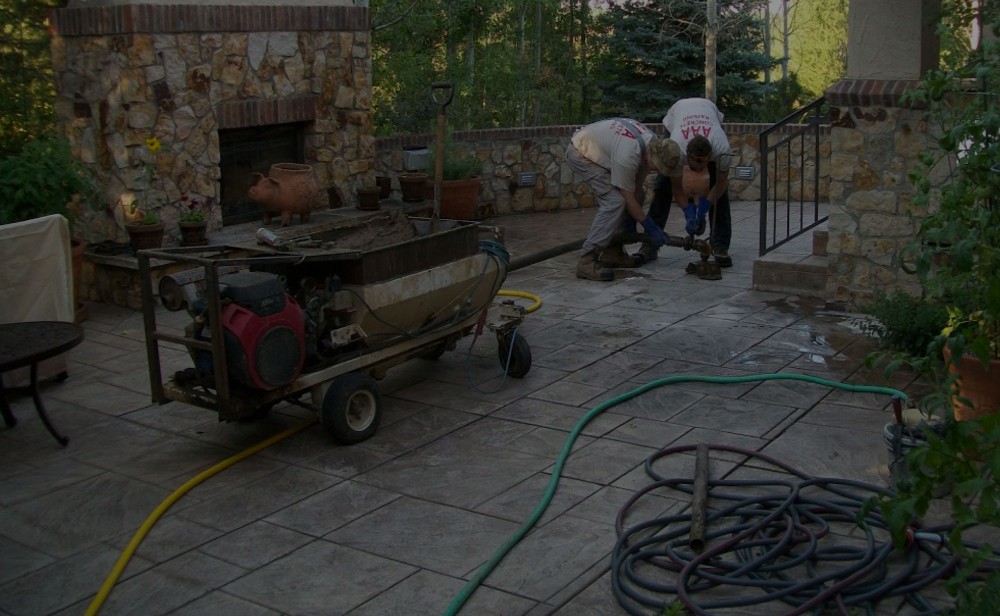
Here's a detail worth asking any contractor about: where does the pump sit? Some outfits park at the street and run a long hose across your property, which limits them to whatever thin mix will make the trip. Our pump is portable, with a short hose, brought right to the panel. That lets us batch the slurry to the thickness the job needs and fill every pocket under the slab. The truck itself carries up to 10 yards of material, about two times what other contractors bring, so the lift doesn't pause for a refill. Holes get drilled, the panel comes up, holes get patched flush with concrete, and the site gets swept. No soil pile, no forms, no cure tape flapping for a week.
Sidewalk calls also tend to multiply once Trevor is on site, because the washout that dropped one panel rarely stopped there. He'll check the driveway apron and patio while he's walking the property and quote each piece separately. You choose what gets fixed, and one estimate visit covers the whole property. Look at finished lifts on our work page, then send us the panel that's been catching your shoe. Free estimate, written number.