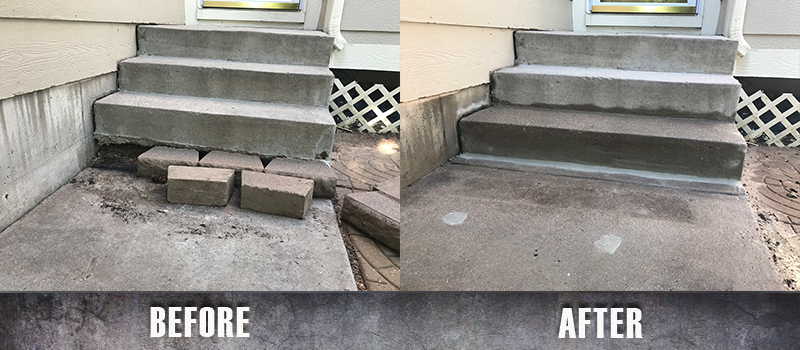
The repair you make before there's anything to see
Void fill is the quiet sibling of concrete leveling, and the smartest money in our trade. Every other service we offer fixes a slab that already dropped. Void fill catches the problem one step earlier: the slab is still sitting at grade, but the soil underneath has washed out or shrunk away, and the concrete is bridging an empty pocket. It holds. Until one delivery truck, one wet spring, or one hard freeze, and then it doesn't.
Voids hide well because the slab looks fine from above, which is exactly the problem. What gives them away is sound. Tap a bedded slab with a steel rod and you get a solid thunk. Tap over a void and you get a hollow tone, clear as knocking on a door. It's a thirty-second test, and it often separates a slab that needs a full lift from one that only needs a fill.
Where the ground goes
Soil doesn't vanish without a reason, and after lifting slabs on Front Range clay since 1988 we've traced almost every void to one of three causes:
- Water on the move. Downspouts dumping at slab edges, plumbing leaks under the floor, sprinkler lines cut too close to the concrete. Flowing water carries fines out from under the slab a little at a time. In older homes, a slow plumbing leak is a common culprit.
- Clay doing what clay does. Expansive soil swells wet and shrinks dry. A run of dry years pulls the soil down and away from the slab bottom, and the void it leaves doesn't close back up when the rain returns. The soil just squeezes around the slab instead.
- Fill that settled late. Utility trenches, over-dug footings, and backfilled foundations all consolidate under load. When the trench line runs under a slab, the slab ends up bridging it.
The longer story is in how voids form under concrete, and if you want to know how pros confirm what the tap test suggests, read how contractors find voids.
Filling a void vs. lifting a slab
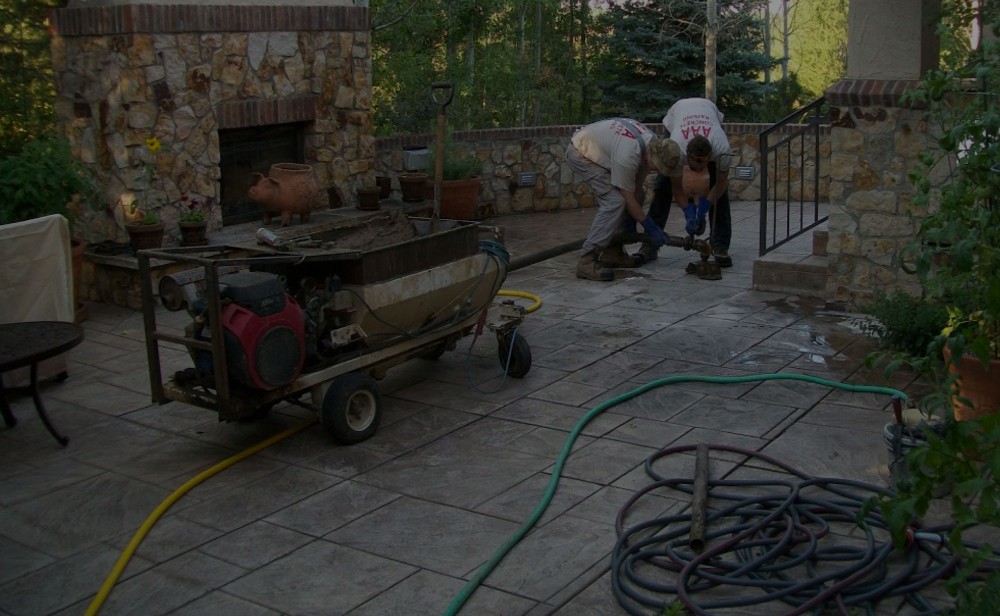
The distinction decides what you pay, so here it is plainly. Leveling is for a slab that has already dropped: we pump slurry under pressure until the slab rises back to grade. Void fill is for a slab still at grade with missing support: we pump the same slurry at lower pressure until the pocket is full, and the slab never moves. Same 1-1/2" holes, same water-soil-cement mix, batched on site to what the job needs. Different goal.
If the slab has dropped a little and there's a void besides, we can do both in one visit, pressure-pumping until the slab moves back to grade and the pocket underneath is packed solid. Trevor will tell you during the estimate which situation you actually have, and if a modest fill is the whole job, that's what he'll quote. That honesty is the business model.
What it costs and when to do it
Like everything we do, void fill gets quoted in person, and the estimate is free. For a general yardstick, HomeAdvisor puts a typical residential mudjacking job at $300 to $2,500 or more. The best time to fill a void is the moment you know it exists, because every month it sits, the bridge span carries loads it was never designed for. Residential concrete is typically poured at 2,500 PSI; it's built to sit on soil, not to span air. The typical triggers for a call:
- A hollow tone when you tap the slab, or a soft, sunken feel along a slab edge.
- A plumbing leak that was just repaired under or beside a slab. The leak is fixed; the soil it flushed out is still gone.
- An inspection report that flagged voiding under a garage, porch, or basement floor during a sale.
- Excavation or utility work next to existing concrete.
Cold weather slows the cure but doesn't change the result, so a void found during a January inspection can often be filled that same season instead of bookmarked for spring. Solidly frozen ground is what pauses the work, and Trevor will tell you how the forecast affects your job.
We also take on commercial work for property owners, managers, and HOAs across the metro. Same method, bigger volumes. Our truck carries up to 10 yards of material, about two times what other contractors bring, and the portable pump with its short hose reaches the slab itself, so the pour doesn't pause for refills and the mix gets batched to the job.
Cheap insurance, honestly sold
Filled early, a void is a minor line item. Ignored, it becomes a settled basement floor, a cracked garage slab, or a driveway panel hanging on its edges, and the repair cost climbs with every season. The estimate is free and in person. Trevor taps the slab with you standing there, and you hear the answer yourself before anyone talks price. Book the estimate, and if there's no void, he'll tell you that too and shake your hand on the way out.