A simple warm-weather checklist that helps your slabs look better, and last longer
Denver summers are prime time for concrete maintenance. Heat, UV exposure, quick pop-up storms, and sprinkler overspray can all work water into small openings around your driveway, patio, garage floor, and walkways. Over time, that water can soften or wash out supporting soils, creating voids that lead to settling, rocking slabs, and new cracks.
One of the most cost-effective steps you can take is maintaining the caulk (sealant) in your joints and control cracks, especially where concrete meets concrete, concrete meets your garage slab, or concrete meets your home’s foundation. This guide breaks down what to inspect, how to choose the right sealant, and when it’s smarter to address underlying voids before you seal.
Why caulking matters for concrete in the Denver metro
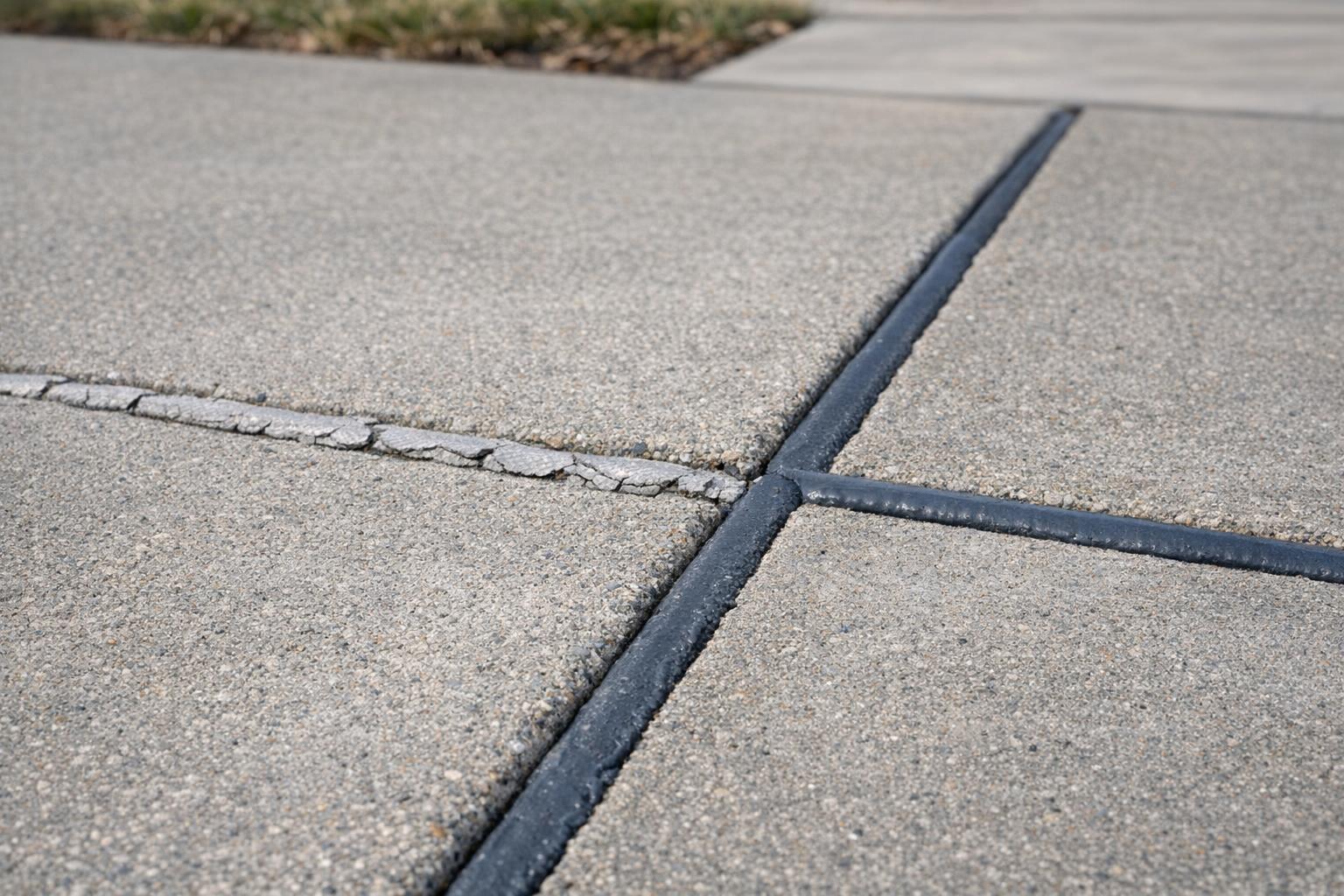
Most homeowners notice caulk only when it looks messy or starts peeling. Functionally, concrete joint sealant is there to stay flexible as slabs expand and contract with temperature swings, while limiting water intrusion into the base materials below. A flexible sealant is important because joints and cracks can move, rigid patch materials can debond or crack again when movement returns.
In practical terms, good joint sealant helps reduce:
• Soil washout and void formation under driveways, sidewalks, patios, and garage approaches • Freeze-thaw stress (water gets in during warmer months, then expands during winter) • Weed/ant intrusion in wider joints • Premature edge spalling along joint linesJoints vs. cracks: what you should (and shouldn’t) seal
Not every line in your slab should be filled the same way. Here’s a homeowner-friendly way to think about it:
Control/expansion joints: Planned gaps that help concrete crack “neatly” and accommodate movement. These are usually ideal candidates for flexible joint sealant. Stationary hairline cracks: Some can be sealed for water control, but the prep and product choice matter. If a crack is widening, offset, or changing seasonally, it may be “active” and needs a flexible approach. Structural or moving cracks / settlement cracks: If one side is lower, the slab rocks, or gaps are opening near corners, sealing alone is usually cosmetic. The underlying support problem should be addressed first. Important: If you suspect a void or soil erosion under the slab, sealing is still helpful, but it won’t “re-support” the concrete. That’s where void filling and slab lifting come in. Learn about Void Fill and soil erosion under concreteQuick “Did you know?” summer facts homeowners miss
Did you know: Many joint sealants are categorized by performance standards (commonly referenced in commercial specs), which helps make sure flexibility and durability where joint movement is expected. Did you know: If your caulk is stuck to the bottom of the joint (instead of only the sides), it can tear early as the joint moves. Backer rod is the simple fix that improves longevity. Did you know: A “sealed” joint can still leak if the slab has settled and created a low spot that funnels water toward the joint line, grading and drainage matter as much as caulk.Step-by-step: summer concrete caulking maintenance (Denver-friendly)
1) Walk your slabs after a sprinkler cycle or rain
This is the fastest way to spot where water is actually going. Look for water streaming into joints, disappearing under slab edges, or pooling near the garage door, driveway panels, and patio corners. If water is “finding a path,” it can also find a way into base materials.
2) Identify the joint type (horizontal vs. vertical, sag vs. self-level)
Horizontal joints (flat surfaces) often use self-leveling sealants for a clean finish. Vertical or sloped joints typically need a non-sag product so it doesn’t run. Using the wrong grade is a common reason caulk looks wavy, thin, or fails early.
3) Remove failed caulk completely (don’t “cap” over it)
New sealant bonds best to clean, sound concrete. If you apply fresh caulk over brittle, dirty, or peeling material, you’re relying on the old bond. Cut it out, pull it free, and remove residue that prevents adhesion.
4) Clean and dry the joint
For summer work in Denver, give the joint time to dry after washing or storms. Dust and grit are the enemy of adhesion. A clean, dry joint improves both appearance and service life.
5) Use backer rod where appropriate
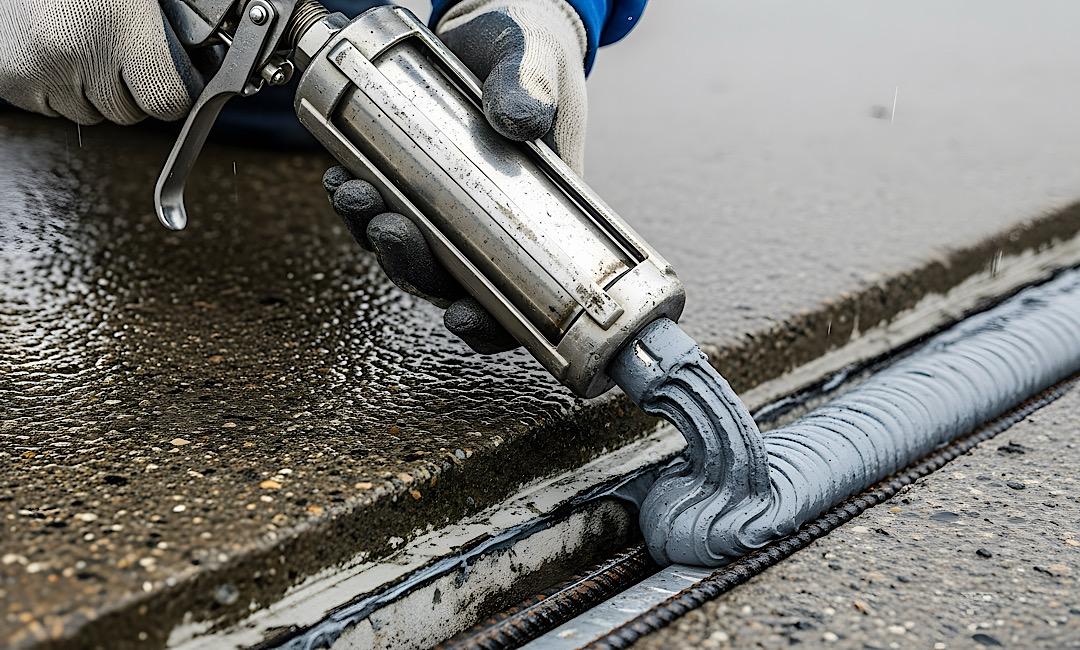
Backer rod is a foam “rope” that sits in the joint and helps you control sealant depth. It also encourages a better shape for movement (bonding to the sides, not the bottom). If the gap is deep, backer rod is usually a must.
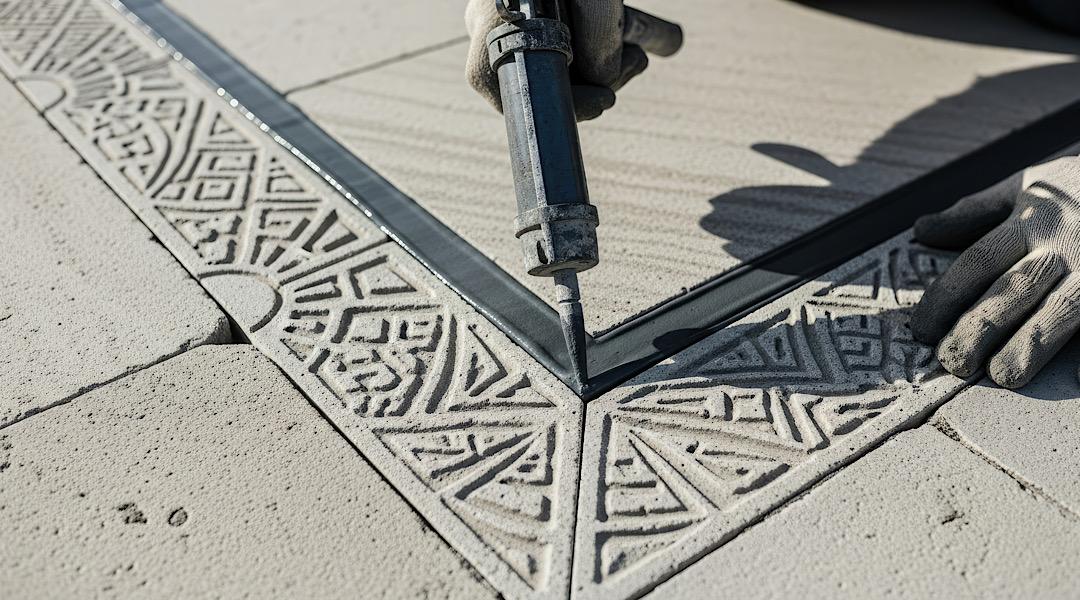
6) Apply the sealant in a consistent bead and tool it (if needed)
A smooth bead isn’t just about looks, it reduces thin spots that tear and helps water shed instead of sitting in tiny channels. Follow the product’s cure-time rules before traffic, sprinklers, or washing.
7) If the slab is settled, fix the “why” before you re-caulk
If one panel has dropped, the joint may keep reopening or tearing because the slabs are moving differently. In many cases, lifting and stabilizing the slab first gives your sealant a stable geometry to work with.
Driveway Leveling Sidewalk & Walkway Leveling Patio Leveling Garage Floor LevelingQuick comparison table: common sealant “fit” by situation
| Where you’re sealing | Best “behavior” | What to avoid | Why it matters |
|---|---|---|---|
| Flat driveway/patio joints | Self-leveling, flexible | Rigid patch mixes; brittle caulk | Reduces water entry while allowing movement |
| Vertical joints (steps, walls, some edges) | Non-sag, flexible | Self-leveling products on vertical faces | Prevents run-off and thin spots |
| Wide joints with depth | Backer rod + flexible sealant | Filling the whole depth with sealant | Helps sealant stretch instead of tearing |
| Settled slabs with offset edges | Lift/stabilize first, then seal | “Cosmetic-only” caulking as a fix | Addresses the cause (support loss), not just the symptom |
Local angle: what Denver homeowners should watch for in summer
Along the Front Range, it’s common to see fast weather swings, strong sun exposure, and seasonal moisture changes that can affect soils under slabs. In many neighborhoods, concrete settlement shows up first in high-traffic areas: driveway panels near the street, sidewalk sections near downspout discharge, and garage approaches where water repeatedly runs along the same path.
If your caulk keeps separating in the same spot, treat that as a clue, not just a “bad caulk job.” Repeated failures often point to movement caused by voids, drainage issues, or a panel that’s no longer supported evenly.
A practical Denver checklist: • Confirm downspouts discharge away from slabs (and not into joint lines)• Watch for soil “piping” at slab edges after storms or heavy irrigation
• Re-grade low areas that funnel water toward your garage or patio
• If a corner drops or rocks, consider leveling to restore drainage and reduce joint stress Uneven interior slab? See Basement Floor Leveling
Not sure if you should caulk, level, or void-fill first?
AAA Concrete Raising has helped Denver-area homeowners stabilize and restore slabs since 1988. If you’re seeing recurring joint openings, trip hazards, or signs of soil erosion under concrete, a quick evaluation can save you from redoing the same maintenance every season.
Request a Quote / Schedule an Evaluation
Prefer a fast estimate? Start here