Common Issues:
Concrete joints and cracks often deteriorate due to weather exposure, soil movement, and natural settling, allowing water to seep beneath the surface. Left unsealed, these gaps can lead to further cracking, erosion, and costly damage that diminishes your home’s curb appeal.
Our Solutions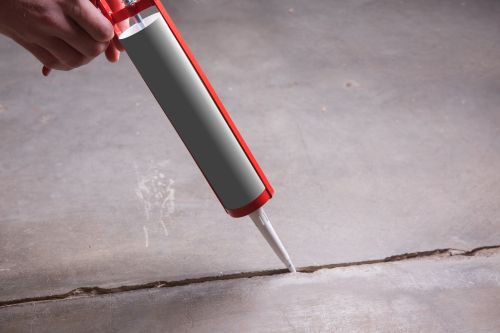
Why Caulking Your Concrete Matters In Colorado
Water is the great enemy of concrete, and construction in general. The less water intrusion, the better. In Colorado, that problem is even worse because of our repeated freezing and thawing during winter. As AAA explains in its article on how the freeze-thaw cycle damages Denver concrete, moisture expands when it freezes and can quickly turn small surface openings into larger failures. The same pattern shows up when Denver snowmelt can undermine your concrete, especially when water keeps seeping beneath slabs.
Caulking helps limit water entry, slow soil erosion, protect the surface from freeze damage, and reduce the chance that runoff will travel along the slab edge toward your home. Proper drainage still matters, which is why downspout extensions are so important, but sealing the openings in the concrete is a critical part of the protection plan.
Caulking also improves how the concrete looks. Instead of jagged, dark cracks and open gaps, you get clean, finished lines that make concrete look more cared for. In many cases, a worn slab can be made functional and attractive again with the right combination of leveling and sealing, at a fraction of the cost of replacement.
Get a free quoteConcrete Caulking FAQs
Colorado’s freeze-thaw cycles can cause water trapped inside concrete cracks and joints to expand, leading to larger cracks, surface damage, and soil erosion beneath slabs. Concrete caulking helps seal these openings to reduce water intrusion and protect the concrete from long-term damage.
Unsealed cracks and joints allow water to seep below the concrete surface, which can lead to soil washout, uneven slabs, additional cracking, and premature concrete deterioration. Over time, these issues may create safety hazards and increase repair costs.
Yes. Caulking helps create cleaner, more finished-looking concrete surfaces by sealing dark gaps and jagged cracks. Properly sealed joints can make driveways, sidewalks, and patios look better maintained while helping extend their lifespan.
Concrete caulking can help reduce water intrusion that contributes to soil erosion beneath slabs. While caulking alone will not lift sunken concrete, it is an important part of preventing future settling when combined with proper drainage and concrete leveling services.
The lifespan of concrete caulking depends on weather exposure, traffic, and the condition of the concrete. In Colorado, it is a good idea to inspect joints and cracks regularly and reseal them when the material begins to crack, separate, or wear down.
From Our Clients
R.M.“Did a great job raising the concrete in my garage. The quote was quick and fair and the work was performed timely and correctly. I would definitely recommend them for any concrete raising job.”
Michael N.READ MORE REVIEWS“Howard is wonderful. He patiently walked me through the job and the process. He and his crew did a great job on my front porch and delivered just as promised. Prompt, competent, excellent work. Fair price. Thank you Howard.”
Where Concrete Caulking Delivers The Most Value
Concrete caulking is especially useful on driveways, sidewalks and walkways, patios, garage floors, and basement floors. These surfaces are constantly exposed to weather, traffic, runoff, and seasonal movement.
This is especially true in pedestrian areas. Failing joints and widening cracks can become part of a larger safety problem, particularly where uneven concrete already creates trip hazard liability for homeowners.
The Two Critical Factors: Material And Application
Not all caulking jobs are equal. The two biggest factors in long-term performance are the material that is used and the installation.
Most caulking contractors, especially in residential work, use polyurethane products. Polyurethane is popular because it is inexpensive and easy to install (although many contractors skip half the steps for proper installation). While it does work, it also has several major limitations. It has a shorter lifespan, often around 2 to 4 years (less with improper install); it also has less movement and flexibility before tearing; it degrades under UV exposure; chalks over time, changing the look and color of the finished repair.
Silicone is the better option in all these areas that matter most. With proper installation, silicone lasts 10 to 20 years, handles movement of more than 300 percent of the original joint width (versus the 30-50% ability of polyurethane), ignores UV exposure, and maintains its appearance without the chalking commonly seen in lesser products. In keeping with AAA’s commitment to quality, we choose premium silicone products for most concrete caulking applications, even though they cost more and are more demanding to install. Specifically, we use Pecora products, which are a high-grade, commercial grade product designed for every season and condition. In a few specialized situations where a polyurethane hybrid is the right material, we use it, but our standard is to provide the best overall system for long-term durability.
Application is just as critical as material choice. The crack or joint has to be cleaned thoroughly (chased), so the sealant bonds to sound concrete – not dust, dirt, or deteriorated material. Joint design matters too. If the sealant bonds to the bottom of the crack instead of only to the sides (3 way adhesion), the joint cannot move the way it should and adhesion failure will quickly occur. Improper chasing of a crack or 3 adhesion are both problems we see constantly in the field when removing a previous contractor’s work to reinstall caulking for customers. In most cases, this improper installation has caused joint failure in less than a year!
That is why lasting concrete caulking involves much more than simply filling a crack. A proper repair requires cleaning (i.e. chasing) the joint, using the right backer material or bond breaker, selecting the right sealant for the joint size and movement, and tooling the material for a clean finish (caulking must be recessed slightly below surface, not level with surface). Many caulking jobs fail quickly, not because caulking does not work, but because the installation was rushed or done without the right preparation. AAA’s crews are specially trained to install caulking for maximum longevity, not just to make it look filled on day one.
When Caulking Alone Is Not Enough
Caulking is a protective repair, but it does not correct an unsupported slab by itself. If a crack exists because the concrete has already dropped, tilted, or developed empty space underneath, sealing the opening without fixing the support below is only a partial solution. In those cases, the right first step is often void fill or slab lifting, followed by crack and joint sealing once the slab is stabilized.
This is one of the biggest reasons homeowners get frustrated with repeat cracking. The surface gets sealed, but the underlying cause is still there. If you are weighing repair versus replacement, AAA’s guide to concrete leveling costs in Denver is a helpful place to start. In many cases, lifting and caulking together can preserve concrete for years while keeping the project far more affordable than a full tear-out.
Signs It Is Time To Caulk Your Concrete
You should consider professional caulking if you notice widening cracks, missing or failed joint filler, weeds growing through joints, water pooling after storms, gaps between slabs and the foundation, or older caulk that has torn, shrunk, or pulled away from the concrete. The sooner these issues are addressed, the better the chance of preventing more significant damage below the surface.
Why Choose Us
AAA Concrete Raising focuses on practical, long-lasting repairs for real Colorado conditions. Our goal is not just to make cracks look better. It is to help protect the slab, reduce future damage, and give you a cleaner, more finished result. We strive to give customers the same quality service and product we would want for our own homes.
If your concrete is still structurally worth saving, professional caulking can be one of the smartest maintenance steps you take. And when sinking slabs or voids are part of the problem, AAA can combine leveling and sealing into one sensible repair strategy that restores safety, function, and appearance without unnecessary replacement.
GET A FREE QUOTENext Steps:
If you are dealing with cracked joints, slab-to-foundation gaps, or concrete that has started to sink, call AAA Concrete Raising to schedule your estimate.
(303) 526-2222