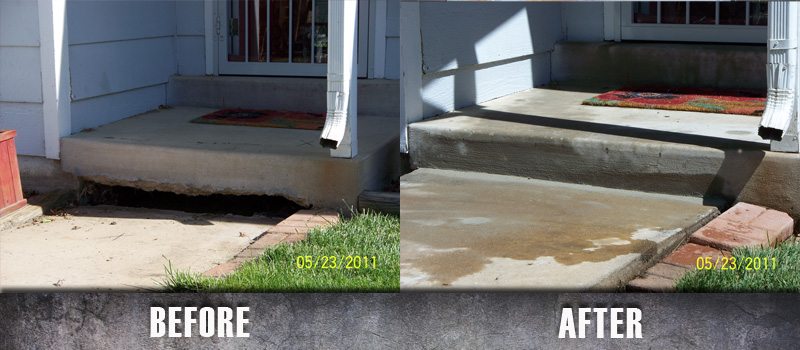
Garage floors don't wear out. They lose the ground under them.
Garage floor leveling is a different animal from driveway work, and the difference is what's under the slab. When we lift a settled garage floor in Denver, Wheat Ridge, or Westminster, we're almost always fixing one of two things. Either the fill dirt under the slab was never compacted properly when the house was built, and it's been slowly consolidating ever since, or water has been getting in from the apron or a hose bib and washing the base out a scoop at a time.
The first problem is common in older homes. The builder backfilled the foundation, poured the garage slab on top of loose fill, and gravity has spent decades settling it. The slab cracks along the middle, one half drops, and the crack widens every winter. The second problem announces itself differently: a slab that was flat for years suddenly develops a low corner, usually after a wet spring.
Telling those two apart is why Trevor walks every job in person. Uncompacted fill settles once and stays put after we lift it. An active water problem will re-dig the void unless the water gets rerouted. We fix the slab either way, but you'll know which situation you own before we drill a hole.
What the repair involves
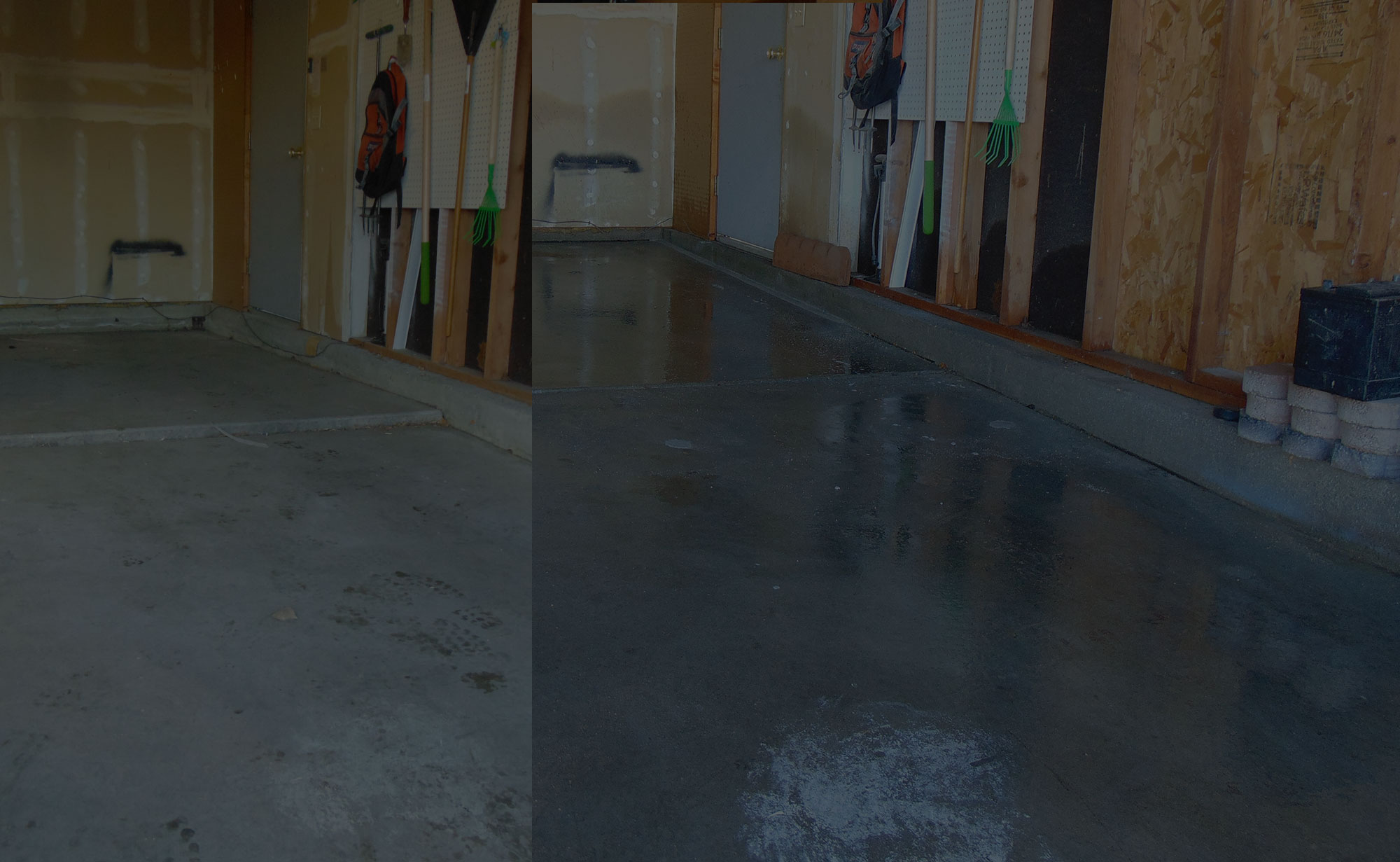
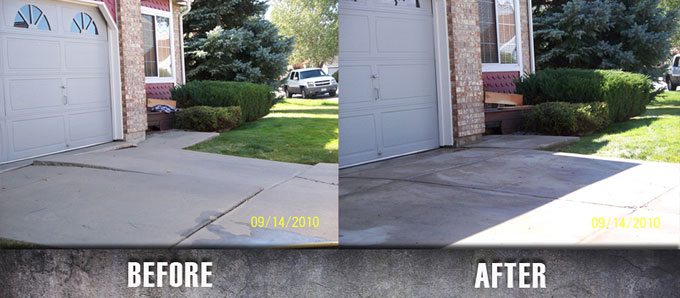
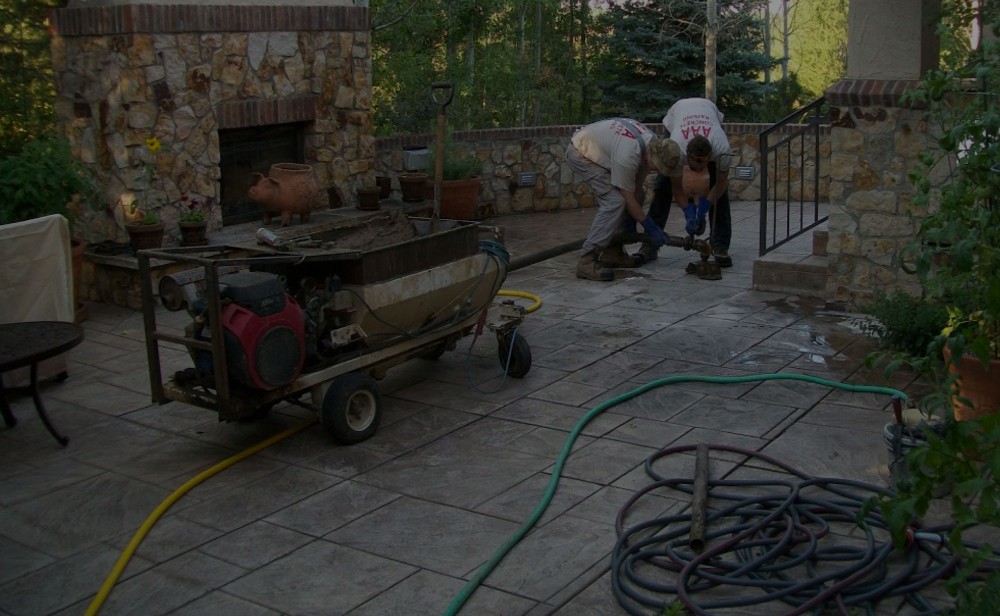
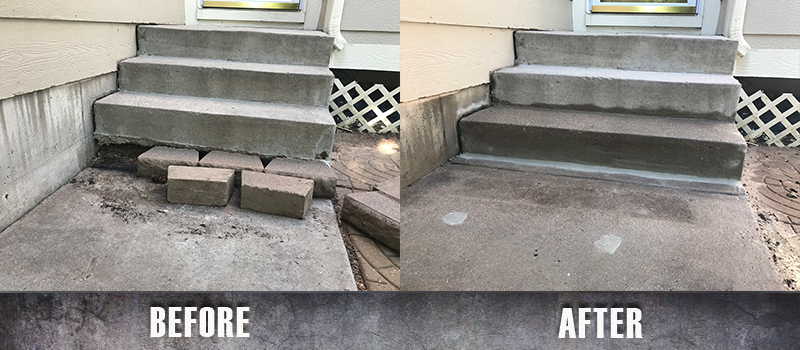
Mudjacking a garage floor works the same as any slab lift. We drill 1-1/2" holes through the low sections, normally spaced about 4 to 6 feet apart, and pump a slurry of water and sandy loam soil underneath. Because our pump is portable with a short hose, it comes right to the slab, and we batch the mix to what your floor needs instead of running one recipe through a long hose from the street. The slab rises gradually while we watch the surface. If the floor has a long crack down the middle, we can usually bring both sides back to the same plane, and the crack that used to catch your shoe becomes a line you sweep over.
Settlement depth is rarely the limiting factor. Mudjacking can raise a slab up to 12 inches. Past a point the issue stops being the floor and starts being where the slab meets the foundation wall, and Trevor will tell you honestly when replacement is the smarter spend. One hard rule up front: interior floors with heat vents running through the slab are not candidates for mudjacking. If your garage has in-floor heat ducts, say so when you call and it saves everyone a trip.
The one thing we need from you: a clear slab. We can't lift what we can't reach. If the garage is full, plan to clear the area over the low sections before the job, and Trevor will tell you at the estimate how much room the work needs.
The cost, and what drives it
Trevor quotes every garage floor in person, free, with a written number. Slab area and lift height drive the price, because together they decide how much material goes under the floor. A single low corner near the apron is a smaller job than a full two-car slab that's dropped several inches. For an industry yardstick, HomeAdvisor puts a typical residential mudjacking job at $300 to $2,500 or more. Compare that against slab replacement, which means jackhammering out the old floor inside a finished structure, hauling it through your driveway, re-pouring, and keeping cars out while new concrete cures.
The reason the repair lasts comes down to the fill. Cured slurry is hard, heavy material, far heavier than foam, and it doesn't wash out the way loose fill does. It's the same reason we don't use polyurethane foam for this work.
Before you epoxy, level
A lot of our garage calls come from homeowners planning a floor coating. Good instinct, wrong order the first time they call. Epoxy and polyaspartic coatings follow the slab, so a coated floor that's out of level is a permanent reminder every time a ball rolls to the same corner. Lift first, coat second. The patched pump holes take coating the same as the rest of the slab once cured, and the finished floor reads as one plane. We wrote up the details in how to fix low spots on a garage floor.
Check the slab yourself before you call
Two 30-second tests tell you most of what Trevor will confirm in person. Set a straight board or level across the crack and see how far the low side has dropped. Then tap the slab with a screwdriver handle every couple of feet: a solid thud means the slab is bedded, a hollow tone means there's a void underneath, and a void under a garage slab is worth filling before the settling starts. A slab that sounds hollow but hasn't dropped yet is exactly what our void fill service is for. You can read how contractors find voids under concrete for the longer version.
The estimate is free, in person, and comes with a written number. Tell us what the floor is doing and Trevor will come take a look.