Stop water from turning small cracks into big concrete problems
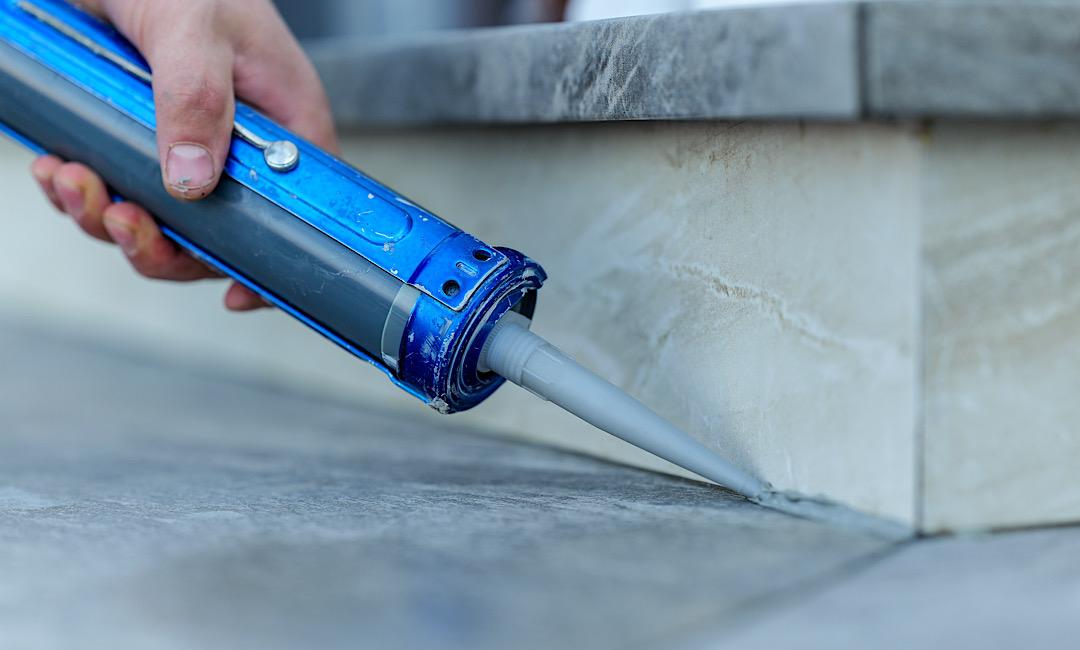
Concrete crack caulking is one of the simplest ways to slow down deterioration of driveways, sidewalks, patios, and garage approaches around the Denver metro. The goal isn’t to “glue” concrete back together—it’s to block water and debris from getting into cracks and joints where freeze-thaw and soil movement can widen damage. When it’s done correctly (and at the right time of year), caulking can help reduce spalling, keep edges from breaking off, and make surfaces easier to maintain.
What “concrete crack caulking” actually means (and what it doesn’t)
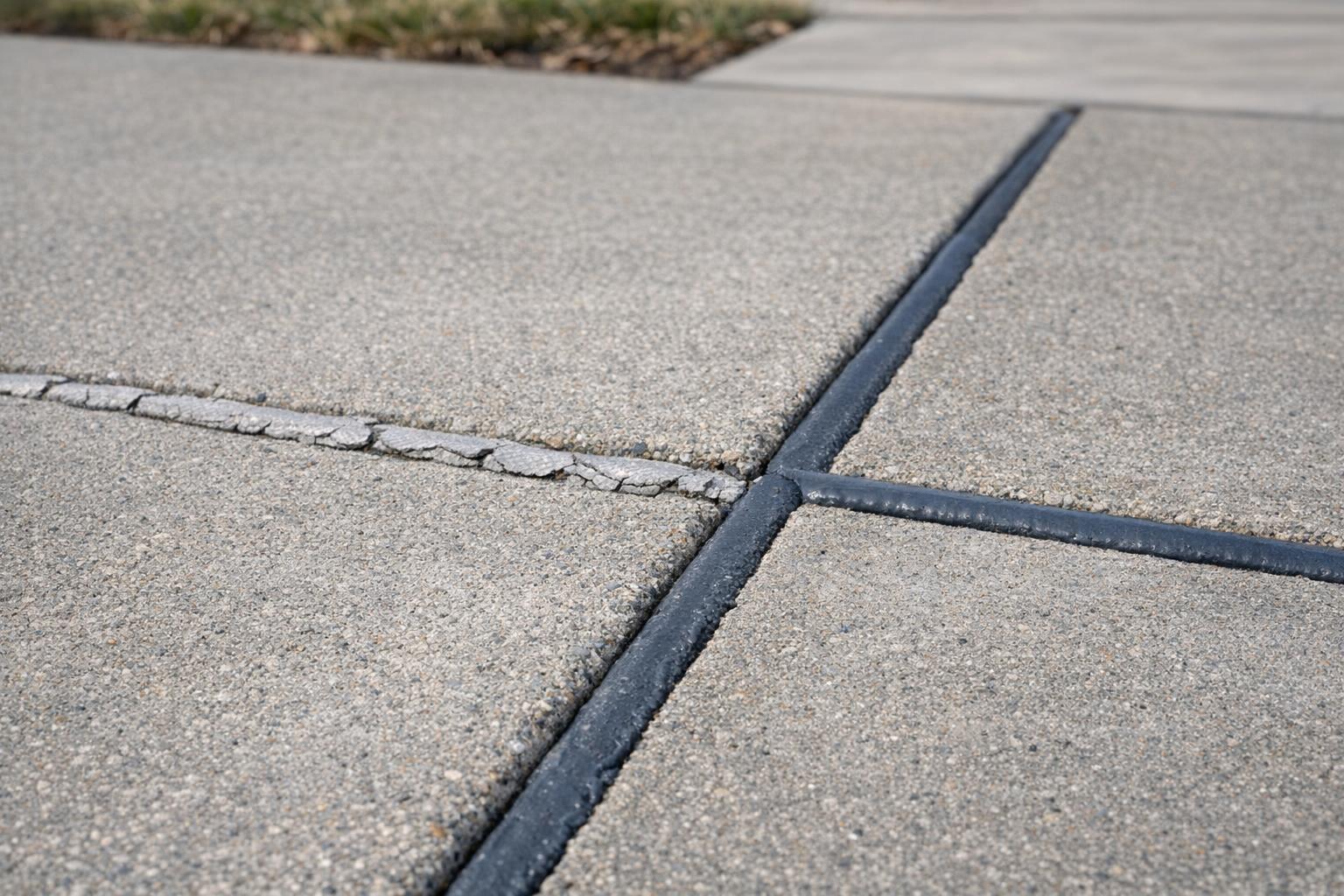
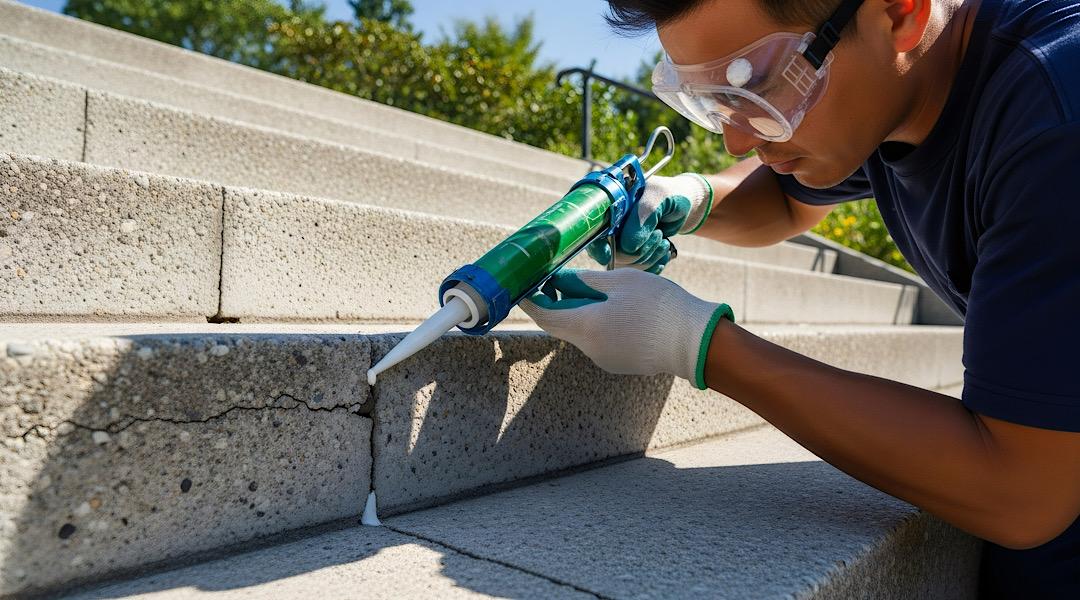
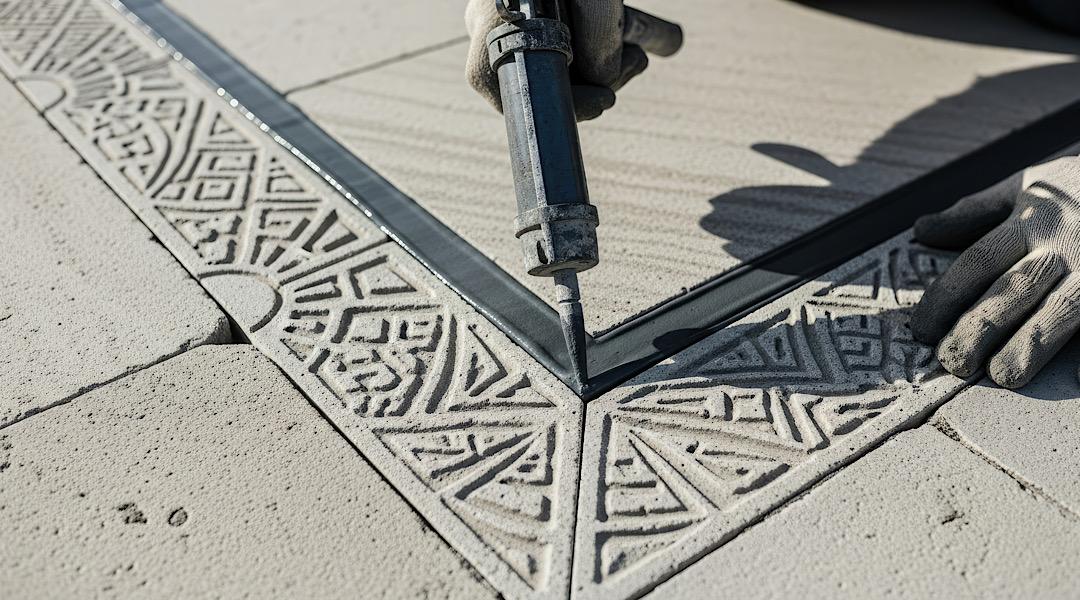
Crack caulking usually refers to applying a flexible sealant into a crack (random crack) or into a planned joint (control joint / expansion joint). In exterior flatwork, the best sealants stay flexible so they can move with temperature swings.
It does not “level” a slab. If a sidewalk panel or driveway section has dropped and is holding water, caulk won’t fix the underlying void or soil loss under the slab. In that case, leveling (mudjacking) and/or void fill is often the first step—then sealing becomes the protective step afterward.
A quick rule of thumb
Seal to keep water out. Lift/level to correct slope and eliminate trip hazards. If you only seal a crack that’s being pulled apart by settlement, you’ll likely be redoing the sealant sooner than you’d like.
Why Denver cracks and joints are so hard on sealants
In the Front Range, cracks don’t just “sit there.” Temperature swings, snowmelt, and deicers can push moisture into openings; then freeze-thaw expands it and stresses the edges. Add soils that shift seasonally, and you get movement that can break the bond of low-quality or poorly installed caulking.
Common local contributors
Freeze-thaw cycling: moisture in cracks expands when it freezes, stressing edges and widening openings over time.
Deicing products: salts can accelerate surface deterioration and scaling, especially where water is trapped and refreezes.
Water management: downspouts, sprinklers, and poor drainage can saturate subgrade and create voids under slabs that later settle.
Crack vs. control joint vs. expansion joint: seal the right thing the right way
| What you’re sealing | How it behaves | Best approach | When to call a pro |
|---|---|---|---|
| Random crack | May widen, shift, or stay stable depending on movement underneath | Clean, dry, use a flexible sealant; consider backer rod if deep | If the panels are different heights, water is pooling, or the crack is growing fast |
| Control joint (saw cut) | Designed “weak spot” to control where concrete cracks | Seal to reduce water/debris intrusion; keep the sealant profile correct (don’t overfill) | If joints are raveled/chipped or holding water due to settlement |
| Expansion / isolation joint | Separates slabs/structures to allow movement (often near garage, steps, foundations) | Use backer rod + flexible sealant; aim for a clean, bonded “hourglass” shape | If the gap is wide/irregular, very deep, or the slab edge is breaking |
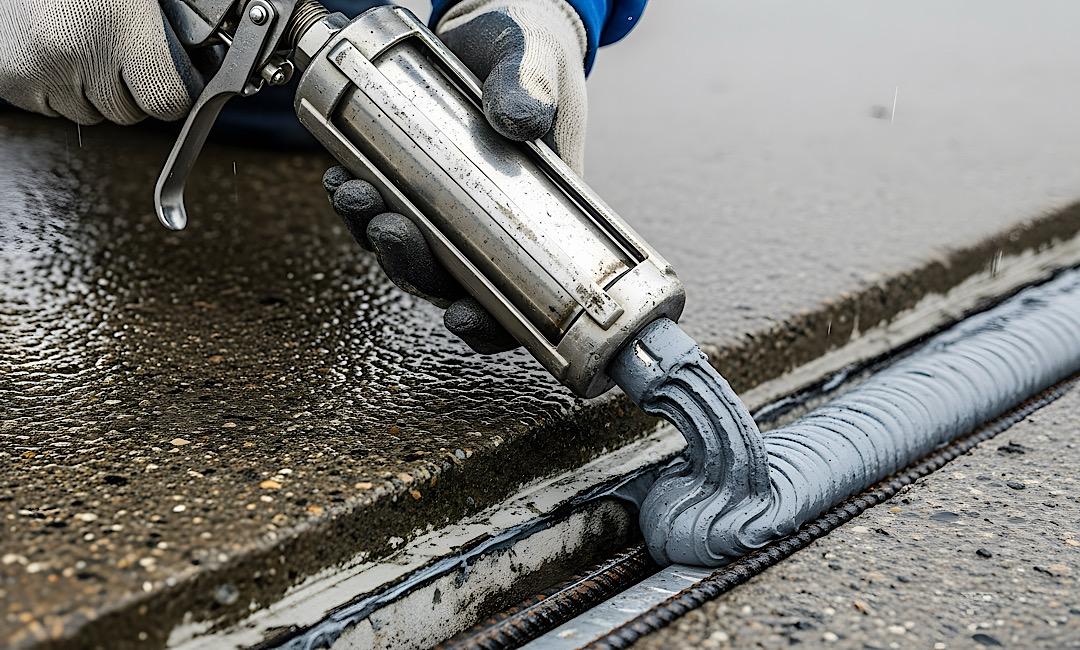
A detail many DIY jobs miss is sealant geometry. In joints, backer rod helps control depth and encourages the sealant to stretch properly with movement (instead of bonding to the bottom and tearing). Many specs also call for backer rod slightly larger than the joint so it stays put and maintains a consistent reservoir for sealant.
A simple, durable process (what good caulking looks like)
If you’re sealing cracks or joints on a driveway, sidewalk, patio, or around a garage approach, the long-term performance usually comes down to preparation more than the tube you buy.
Step-by-step checklist
1) Identify the problem type
Is it a stable hairline crack, a moving crack, or a settled slab with a height difference? If there’s settlement, plan to address that first with leveling/void fill so your sealant isn’t fighting a moving target.
2) Clean thoroughly (no shortcuts)
Remove weeds, dirt, loose concrete, and old failing sealant. For joints, the sides need to be clean enough for the sealant to bond.
3) Ensure it’s dry
Sealant and damp concrete don’t mix well. After snowmelt or rain, give it time to dry—especially in shaded areas.
4) Use backer rod when the joint/crack is deep
Backer rod reduces wasted sealant, helps keep the right depth, and supports a shape that stretches with movement.
5) Apply smoothly and don’t overfill
Overfilled sealant can be more likely to peel at edges or get torn by shovels and tires. The cleanest jobs are consistent in depth and finish.
Timing tip for Denver
Aim for a stretch of mild, dry weather so the sealant can cure without overnight freezing. If temperatures drop too quickly, cure times and adhesion can suffer.
Did you know? Quick facts homeowners miss
Water is the real enemy
Most winter damage accelerates when water sits, seeps into openings, and repeatedly freezes and thaws.
A sealed crack can still “print through”
Even well-installed sealant may show a line as the slab moves seasonally. That doesn’t always mean failure—look for separation, peeling edges, or gaps.
Settlement often starts at the edge
Driveway corners, sidewalk panels near downspouts, and patio edges are common settling zones because water finds the easiest path under slabs.
Local Denver angle: where crack caulking helps most (and where it won’t)
For many Denver-area homes, the highest-value caulking spots are where water and deicer runoff repeatedly hits: driveway joints, sidewalk seams that collect snowmelt, patio cracks under downspouts, and the joint where the driveway meets the garage floor.
If you notice any of these, consider leveling first
• One slab edge is higher than the next (trip hazard)
• Water puddles after sprinklers or snowmelt
• Cracks keep reopening in the same place
• You can see/feel hollow spots or soil loss along edges
If settlement or erosion is the root cause, void fill and mudjacking can stabilize the slab first—then crack/joint sealing becomes a protective finish.
Want a clean, long-lasting fix—not a yearly re-caulk?
AAA Concrete Raising has been serving the Denver metro since 1988 with minimally invasive concrete leveling, mudjacking, and slab support solutions. If cracks are being driven by settlement or voids under the slab, we can help identify the cause and recommend the most durable next step.
FAQ: Concrete crack caulking & joint sealing
Should I caulk hairline cracks?
If they’re exterior and you’re seeing water sit on the surface, sealing can help reduce moisture intrusion. If they’re interior and stable, it may be more cosmetic than functional.
Do I need backer rod for every crack?
Not for every crack. Backer rod is most helpful when a joint/crack is deep enough that you’d otherwise waste a lot of sealant, or where you want controlled depth for better movement performance.
Why does my caulk pull away from the sides after winter?
Common causes are applying over damp/dusty concrete, insufficient cleaning, using a sealant that isn’t meant for slab movement, or a crack that’s actively moving due to settlement or soil washout.
Should I seal first or level first?
If a slab is sunken, rocking, or causing pooling, level/void fill first—then seal. Sealing a moving joint often becomes a repeat repair.
Can crack caulking prevent spalling?
It can reduce one of the major contributors—water intrusion—especially at joints and cracks where water repeatedly freezes and thaws. It won’t fix existing surface scaling, but it can slow further damage when paired with good drainage and maintenance.
Do you handle trip hazards on sidewalks and walkways?
Yes—trip hazards are a common outcome of settlement. If the panels are uneven, check out our sidewalk and walkway leveling service and reach out for an evaluation.
Glossary (quick, plain-English)
Backer rod
A foam rod inserted into a joint to control sealant depth, reduce sealant use, and help the sealant stretch properly with movement.
Control joint
A planned cut/groove that encourages concrete to crack in a straight line instead of randomly across the slab.
Expansion (isolation) joint
A separation between slabs (or between a slab and a structure) that allows movement without pushing against each other.
Spalling / scaling
Flaking or chipping at the surface, often worsened by freeze-thaw and deicers—especially where water sits or penetrates the slab.
Void
An empty space under concrete caused by soil erosion, poor compaction, or water washout. Voids can lead to settling, cracking, and hollow spots.
Mudjacking
A minimally invasive process used to lift and stabilize a sunken slab by pumping a cement-free slurry beneath it (AAA Concrete Raising specializes in this throughout Denver).
If you’d like a second opinion on whether sealing is enough—or whether leveling/void fill should come first—visit our contact page to request an evaluation.