The Unseen Force Cracking Your Concrete
As a homeowner in Denver, you take pride in your property’s appearance and safety. Yet, you may have noticed unsettling changes over the years: a once-perfect driveway now has a treacherous dip, your sidewalk has become a tripping hazard, or your beautiful patio slab has started to sink. These issues aren’t just cosmetic; they’re often signs of a powerful, natural process at work right beneath your feet—the freeze-thaw cycle.
Denver’s unique climate, with its dramatic temperature swings, creates the perfect conditions for this cycle to wreak havoc on concrete surfaces. Understanding how this process works is the first step toward finding a lasting, effective solution that restores your property’s safety and value.
The Science of Freeze-Thaw Destruction
The concept behind freeze-thaw damage is simple but incredibly powerful. It all starts with moisture. Concrete, despite its solid appearance, is porous. Rain, melting snow, and sprinkler overspray seep into these tiny pores and cracks.
- Absorption: Water penetrates the surface of and the soil beneath your concrete slabs.
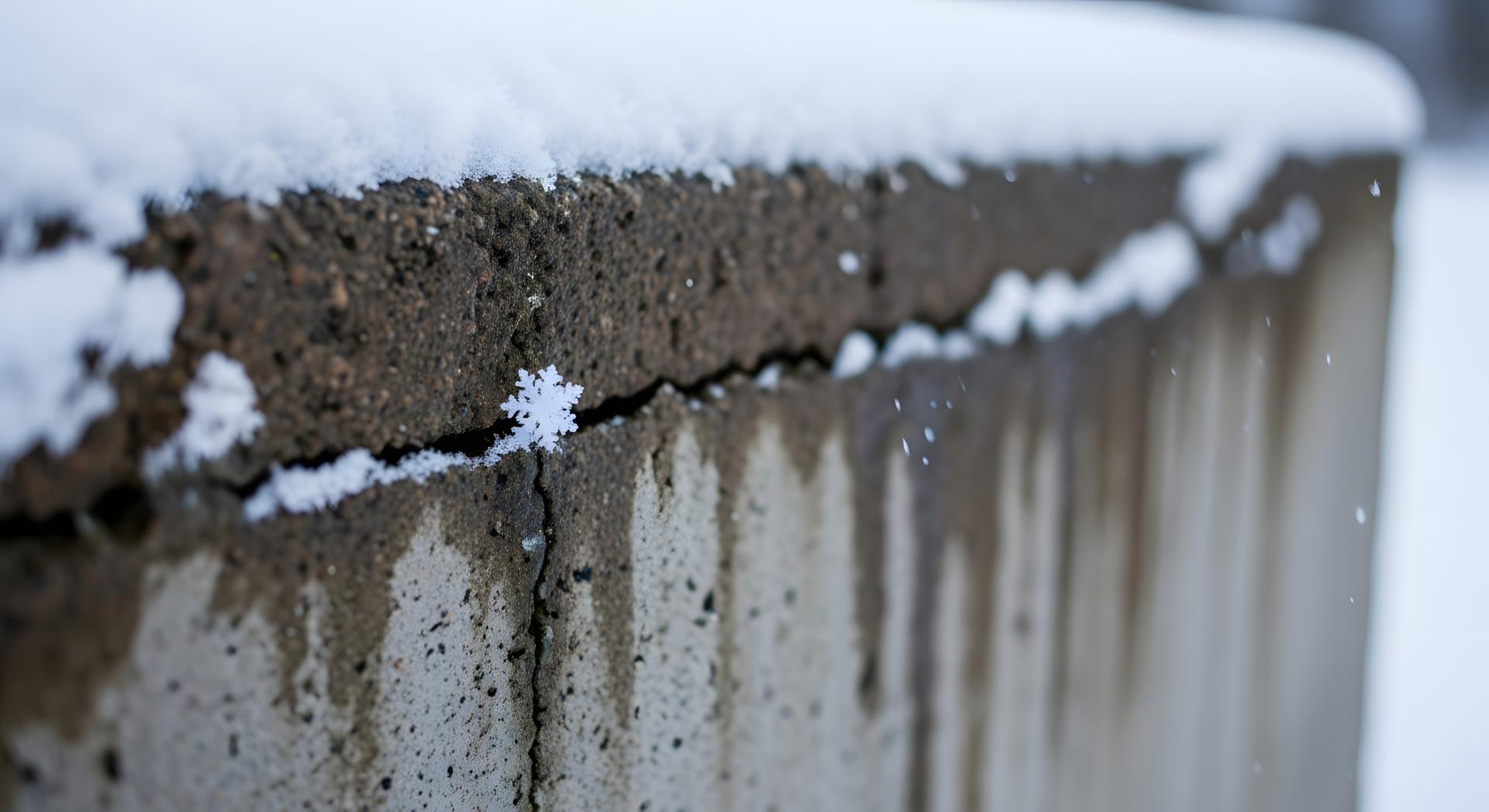
- Freezing & Expansion: When temperatures in Denver drop below 32°F, this trapped water freezes. As water turns to ice, it expands by approximately 9% in volume. This expansion exerts immense pressure on the surrounding concrete from within and on the soil below, pushing the slab upward.
- Thawing & Contraction: As temperatures rise, the ice melts. The water drains away, leaving behind a slightly larger crack or a gap—a void—in the soil beneath the slab. The concrete slab then settles back down into this newly created empty space.
This cycle repeats itself dozens, if not hundreds, of times throughout a typical Denver winter and spring. Each time, the voids grow larger, and the concrete settles further, becoming more uneven, cracked, and unstable. This process is especially tough on areas like your driveway or patio, which are constantly exposed to the elements.
Did You Know? Quick Facts
- The pressure exerted by expanding ice can reach up to 30,000 psi, more than enough to crack concrete.
- Soils in the Denver area often have a high clay content, which expands significantly when wet and shrinks when dry, worsening the effects of the freeze-thaw cycle.
- A single trip-and-fall incident on an uneven sidewalk can lead to significant liability issues for a property owner.
Common Signs of Freeze-Thaw Damage on Your Property
Identifying the problem early can save you significant time and money. Be on the lookout for these clear indicators that your concrete is suffering from freeze-thaw damage:
Sunken or Uneven Slabs
This is the most common symptom. One section of your sidewalk, driveway, or patio sits lower than the adjacent one, creating a dangerous trip hazard. You might also notice water pooling in these low spots after it rains, which accelerates further damage.
Cracking and Spalling
While small hairline cracks can be normal, larger, web-like cracks or areas where the surface is flaking away (spalling) indicate significant internal stress from repeated freezing and thawing.
Hollow Sounds
If you tap on a concrete slab and it sounds hollow, it’s a strong sign that a void has formed underneath. This means the slab is unsupported and at high risk of cracking and sinking further. Our void filling service is designed to correct this precise problem.
Damage Near Downspouts or Edges
Areas that receive a lot of water runoff, like those near downspouts or along the edges of a garage floor, are often the first to show signs of sinking due to concentrated water absorption into the soil.
The Smarter Solution: Concrete Leveling vs. Replacement
For years, the only solution for sunken concrete was a complete tear-out and replacement—a costly, messy, and time-consuming process. Today, there’s a far superior alternative: concrete leveling, also known as mudjacking.
| Feature | Concrete Leveling (Mudjacking) | Full Replacement |
|---|---|---|
| Cost | Typically 50-70% less expensive | Significantly more expensive |
| Time | Most projects completed in hours; usable same day | Takes several days; concrete needs days/weeks to cure |
| Disruption | Minimal mess, no damage to surrounding landscape | Extremely disruptive; heavy machinery, dust, and noise |
| Appearance | Maintains the original color and texture of your concrete | New slab won’t match existing concrete |
Protecting Your Denver Property with Professional Concrete Leveling
In the competitive Denver real estate market, curb appeal and property safety are paramount. Unlevel concrete isn’t just an eyesore; it can detract from your home’s value and pose a real risk to family and visitors. Addressing these issues with mudjacking is a proactive investment in your property. It’s not just a repair—it’s a restoration. By stabilizing the soil base and lifting the slab back to its original position, you eliminate hazards and enhance the overall look and feel of your home, from your patio to your basement floor.
Restore a Safe, Level Surface
Don’t let the freeze-thaw cycle dictate the safety and appearance of your property. Contact the experts at AAA Concrete Raising for a reliable, long-lasting solution.
Frequently Asked Questions
1. What exactly is the freeze-thaw cycle?
It’s the natural process where water penetrates porous materials like concrete and soil, freezes and expands, and then thaws and contracts. In climates like Denver’s, this repeated cycle exerts immense pressure, leading to cracks, voids under the slab, and uneven surfaces over time.
2. Is mudjacking a permanent solution for freeze-thaw damage?
Mudjacking is a highly durable and long-lasting solution. By filling the voids underneath the concrete with a stable material, we create a solid foundation that resists future settling. Addressing underlying water drainage issues, such as misdirected downspouts, will also help ensure the longevity of the repair.
3. How do I know if my concrete can be leveled or if it needs to be replaced?
If your concrete slab is largely intact but has sunk, it’s an excellent candidate for leveling. If the concrete is severely shattered into many small pieces or has widespread surface degradation (spalling), replacement might be necessary. The best way to know for sure is to schedule a free estimate with our experienced team.
4. Can you level any type of concrete slab?
We can level most types of sunken concrete slabs, including driveways, sidewalks, patios, garage floors, basement floors, and steps. Our team can assess any concrete surface to determine if it’s a suitable candidate for our services.
Glossary of Terms
Mudjacking (Slabjacking): A concrete repair technique that involves pumping a specialized slurry mixture under a sunken slab to lift it back to its original position.
Freeze-Thaw Cycle: The cyclical process where water freezes, expands, and then thaws. This process exerts pressure that can damage concrete and cause soil underneath to shift.
Spalling: The flaking or chipping of a concrete surface, often caused by the pressure from freezing water within the concrete.
Void: An empty space or gap that forms beneath a concrete slab due to soil settling, erosion, or the freeze-thaw cycle. Voids leave the slab unsupported and prone to cracking.