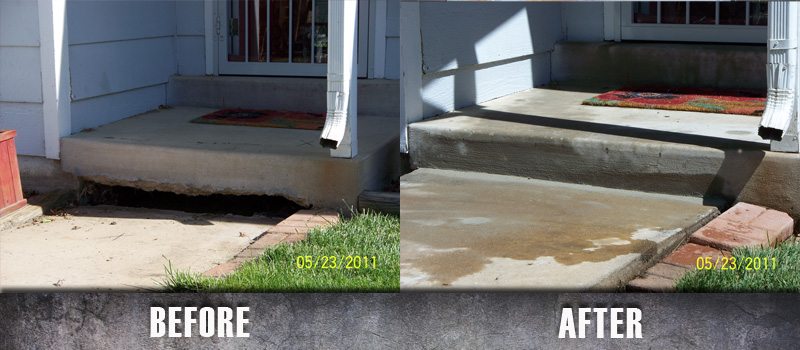
A settled basement floor, fixed without the jackhammer
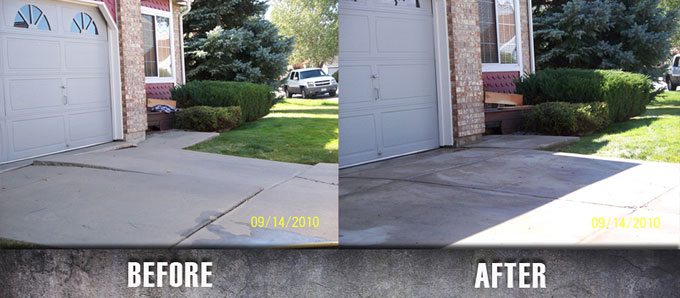
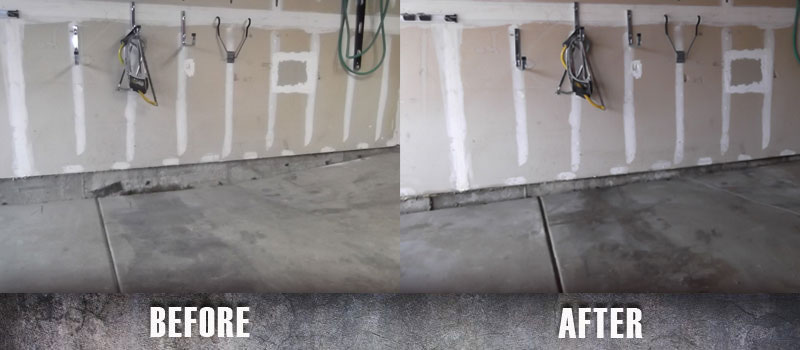
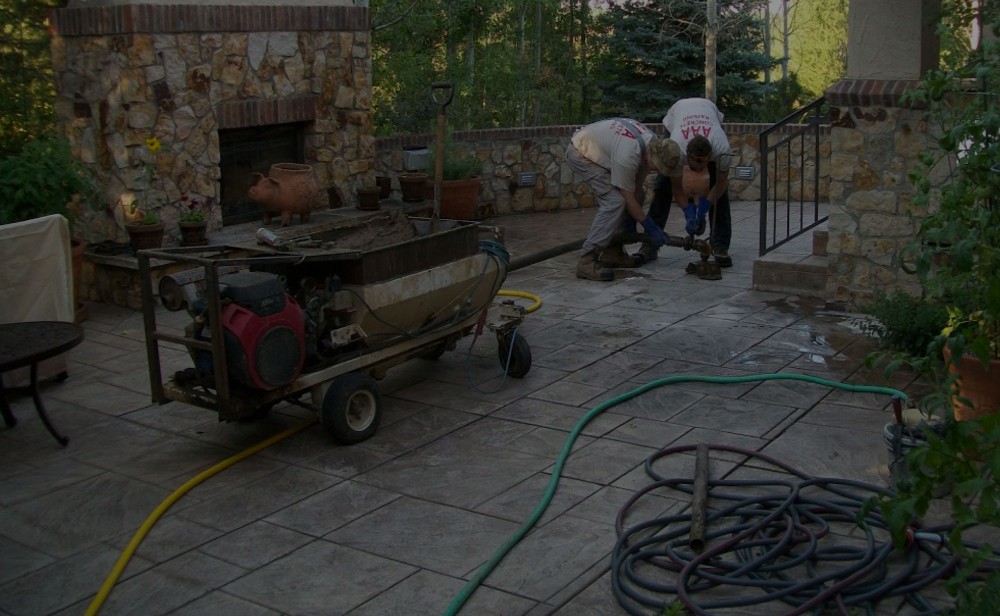
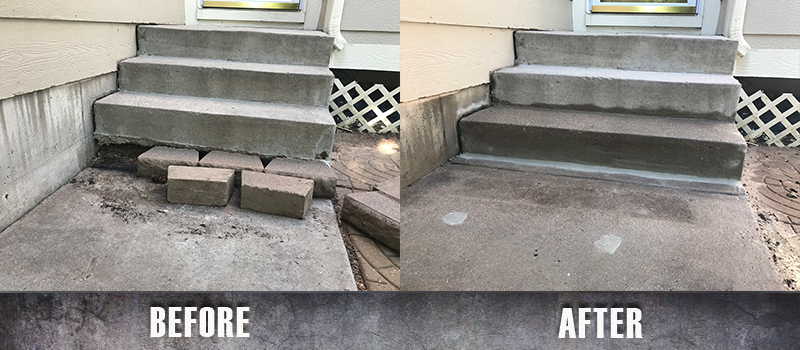
Basement floor leveling is the job homeowners put off the longest, because every other bid they've gotten involves demolition inside a finished house. Tear out the carpet, jackhammer the slab, wheelbarrow the rubble up the stairs, re-pour, and live with the dust for weeks. We do it differently. Mudjacking lifts the existing slab from below through 1-1/2" holes, with the finished walls still finished when we leave.
The slab under your basement floor sits on the same expansive clay as everything else on the Front Range. Dry years shrink that clay and the soil pulls away from the slab. The floor follows: a dip along the perimeter, a hump at the middle, cracks tracking the expansion joints, or water finding the new low spot every time the washing machine drains. Our fix is the same slurry we pump everywhere else, water and sandy loam soil, pushed under the slab until the void is full and the floor sits back at grade.
First, the honest check: is it the floor or the foundation?
This matters more in basements than anywhere else we work, so it's the first thing Trevor looks at during the estimate. A settled floor slab is a flatwork problem, and we fix it. Moving foundation walls are a structural problem, and lifting the slab would only hide it. The tells are different: stair-step cracks at wall corners, doors upstairs that stopped latching, windows that stick in their frames. When we see those, we stop quoting and tell you to bring in a structural engineer before spending anything on the floor.
That answer sometimes costs us the job, and we give it anyway. A company that's been lifting Denver concrete since 1988 doesn't stay in business by pumping slurry under problems it can't fix.
One more gate before any basement quote: interior floors with heat vents running through the slab are not candidates for mudjacking. If your basement has in-floor heat ducts, mention it when you call.
What it costs and what you avoid
Trevor quotes every basement lift in person, free, with a written number. The lift area and the size of the void under the slab drive the price. For a general yardstick, HomeAdvisor puts a typical residential mudjacking job at $300 to $2,500 or more. Hold that against the alternatives: slab demolition and re-pour inside a finished basement, with flooring and trim repair on top, or underpinning bids that start higher still. When the floor is the problem, lifting it is the cheap fix, and the cured slurry is hard, heavy fill that doesn't shrink away or wash out, so once the void is filled, it stays filled.
Working inside a home changes our process, not the method:
- Hole placement: the 1-1/2" holes are normally spaced about 4 to 6 feet apart across the lift area, kept away from the finished perimeter. Drilling through carpet or tile means those finishes need to come up over the work area first; bare slab needs nothing.
- Protection: the process is a clean one, and anything standing near the work area gets covered before the first hole is drilled.
- The mix indoors: water and sandy loam soil. No solvents, no foam chemistry, no off-gassing. The slurry cures inert, which is exactly what you want in the room where your kids play.
- After the patch: the holes get filled flush with concrete. Carpet, tile, epoxy, or LVP goes right over them once cured.
What a basement lift won't do
Mudjacking levels floors. It doesn't waterproof them. If groundwater is coming through the slab or the cove joint, that's a drainage and sealing problem to fix first or alongside, because pooling water is often what dug the void we're filling. We'll point out what we see either way; uneven concrete and water damage travel together often enough that we wrote about it. And if the slab hasn't dropped yet but taps hollow, you may only need void fill, which stabilizes the support before settlement starts and costs less than a lift. The tap test takes thirty seconds and Trevor runs it on every basement estimate.
How the visit goes
Trevor comes out, walks the floor, checks the walls, and tells you which of three things you have: a slab worth lifting, a void worth filling, or a structural question that needs an engineer before it needs us. If it's one of the first two, you get a written number. Timing for the work itself depends on access and the size of the job, and he'll lay that out at the same visit instead of promising a schedule from a website.
Winter changes little here, since basement work is indoors anyway. See what the work looks like on our work page, read up on how voids form under concrete, or request the free estimate and get the real answer instead of the biggest bid.