


A sinking basement floor can cause panic in homeowners who immediately suspect structural issues. While uneven or cracking concrete can signal big problems, this isn’t always the case. The sooner you recognize an issue, the faster you can target a solution. Read on to learn how to identify and fix a sinking basement floor problem before things get worse.
What Are the Signs?
Although concrete is one of the world’s most durable surfaces, it’s only as strong as the soil that supports it. Over time, erosion and evaporation can cause concrete slabs to sag, sink and crack, especially during periods of low rainfall.
Many people expect a sinking basement floor to be obvious. In reality, early signs can be subtle. Since the basement is essentially a foundation for the rest of your home, early signs of trouble will often manifest upstairs. You may notice that doors and windows don’t open and close like they used to. You may also see cracks in drywall or along baseboards.
Most often, you can identify problems by carefully inspecting your basement space. If you aren’t sure whether your floor is sinking, there are a few telltale signs you can look for.

If you have any visible support beams within a finished or unfinished basement, you may notice that they are pulling away from the ceiling. This can be especially troubling since it can compromise the structural integrity of the upper floor, which relies on the lower beams for support.
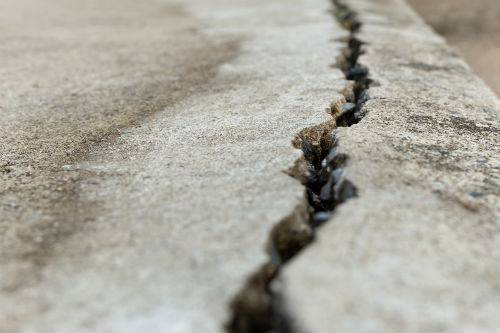
If the sinking is serious, the floor may also feel as if it is sloping from one end to another. It may also be sinking or rising in the middle of the room. Wall or flooring cracks are also a sure sign of a sinking basement floor. If you pull up carpeting and see fissures or cracking in the cement, you should get in touch with a concrete leveling contractor right away.
What Causes a Basement Floor to Sink?
In many instances, a concrete slab will start to sink when the underlying soil compresses due to evaporating moisture within the ground. Essentially, the supporting soil shrinks as it loses moisture over time. A prolonged lack of snow or rainfall can lead to sinking and cracking not just in your basement, but also in your garage, sidewalks, driveway, patios and steps.
In some instances, a sinking basement can be a sign of settling due to poor soil preparation during the construction of a home. Settling happens when a foundation contractor either doesn’t adequately compact the underlying soil before pouring the foundation or fails to use an appropriate base, such as sand. As a result, the slab cracks under its own immense weight and the less-supported portion sinks into the depression underneath.
Whatever the cause of your sinking basement, there is a solution. An experienced concrete leveler can use mudjacking to lift the concrete surface and fill the underlying voids. This affordable, efficient technique is relatively simple: After creating a small hole in the concrete, the contractor pumps a high-quality slurry filler below the surface to fill gaps. This elevates the concrete until it is flush with the ground surface.
Homeowners prefer this method because it’s non-invasive and doesn’t require any real excavating or large, noisy machinery. Mudjacking also costs about 60% less than whole-scale concrete replacement, making it especially appealing to cost-conscious homeowners.
Getting an Expert Assessment
In some instances, a sinking basement can be repaired in a matter of hours. In others, it could be a sign of a serious foundation problem, requiring thousands of dollars in repairs. It’s important to get an expert to determine the cause of your trouble and recommend an appropriate solution.
For over two decades, AAA Concrete Raising has served businesses and homeowners throughout the Denver metro area. Established in 1988, we’ve developed a well-earned reputation for delivering quality service that stands the test of time. Contact our experts to inspect and correct your sinking concrete, so you can protect your biggest investment.
For more information on sinking concrete, visit our blog on Why Concrete Sinks.
Sinking Basement Floor FAQs
Early signs include doors and windows that no longer open and close properly, cracks in drywall or along baseboards, gaps where walls meet the ceiling, and support beams pulling away from the ceiling. More advanced sinking may produce a visibly sloping floor, wall or floor cracks, and fissures in the cement beneath carpeting.
The most common cause is soil compression from evaporating moisture beneath the slab, which shrinks the supporting soil and causes the concrete above to sink or crack -- a problem that can worsen during periods of low rainfall. Poor soil preparation during original construction, such as inadequate compaction or an improper base, can also lead to premature sinking.
Not always -- while a sinking basement floor can indicate serious foundation issues, it is sometimes caused by more manageable factors like soil moisture loss or minor settling that can be repaired with mudjacking. Getting an expert assessment as soon as symptoms appear is the best way to determine the true cause and severity of the problem.
Yes -- mudjacking is an effective and affordable solution for sinking basement floors caused by soil voids, pumping a high-quality slurry beneath the slab to fill gaps and raise the concrete back to a level surface. It costs about 60% less than full concrete replacement, requires no large machinery, and can often be completed in just a few hours.
A sinking basement floor is the foundation of your entire home, and allowing the problem to worsen can compromise the structural integrity of upper floors and lead to significantly more expensive repairs. The sooner a professional assesses and addresses the issue, the more likely mudjacking will be a viable and cost-effective solution.