



One of the world’s strongest materials, concrete is ideal for industrial, commercial and residential construction. That said, like everything else, it can break down over time. Tiny cracks and sags can create tripping hazards and threaten the structural integrity of your property.
To prolong the life of your concrete, it’s best to repair minor issues before they evolve into significant problems. Here’s how you can restore damaged concrete without spending a fortune.
Act Quickly
Leaving minor concrete repairs unattended will usually lead to major problems that can’t be corrected by simple repairs. If you don’t act early, you may be forced to completely replace the entire structure, which can be very expensive.
In some cases, this can include, not just the concrete surface, but foundations, columns or walls. Since minor concrete repair costs much less than total concrete replacement, it’s best to be proactive anytime you notice cracked or sagging concrete in or around your home.
Don’t Do-it-Yourself
These days, homeowners have access to all sorts of helpful remodeling articles and videos on the internet. While these resources may be fine for minor home repairs, they can get you into big trouble if you rely on them for concrete repair advice.
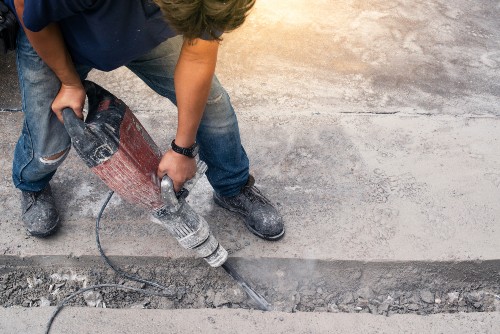

Choose the Right Concrete Repair Method
It’s common for homeowners to spend way too much on concrete replacement when a less expensive option is available. The most expensive way to repair concrete, slab replacement is only necessary in severe instances. In many cases, mudjacking is enough to restore sinking or cracked concrete.
A time-tested, cost-effective concrete repair solution, mudjacking is a very sound way to return settling concrete to its original position. It’s one of the most popular options for homeowners and businesses in need of timely repairs that work within their budgets.
The process is simple: After drilling a relatively small hole into the existing concrete, the contractor injects a slurry filler below the surface to fill up any gaps. This elevates the concrete until it’s completely flush with the ground-level surface.
In addition to being one of the least expensive ways to repair concrete, mudjacking offers several advantages. For one, it’s non-invasive, meaning you don’t need any real digging or large, disruptiv犀利士
e machinery. The task can be completed with very little disturbance to a property, household and surrounding neighbors.
Mudjacking costs around 60% less than total concrete replacement, making it a very attractive option for cost-conscious homeowners. It’s also a fast, efficient way to restore damaged concrete. The whole process can usually be finished in a single day, often within a couple of hours.
While it can be a fast, cost-effective option for concrete repair, mudjacking isn’t always appropriate. If the slab has extensive cracking or other serious damage, total replacement may be necessary. Mudjacking is typically only appropriate if the settling concrete is in relatively good shape.
Hire the Right Professional
For reliable, high-quality mudjacking, you need a seasoned concrete contractor. Mastering this skill takes years, and a lack of expertise can lead to disappointing results.
It’s very important to choose a reputable professional who’s been in the mudjacking business for many years. With an experienced contractor, you are much more likely to get expert service and longer-lasting results.
For more than two full decades, AAA Concrete Raising has served Colorado businesses and homeowners all around the Denver metro area. Our innovative equipment completely eliminates the need for awkward, loud machinery, ensuring fast, efficient work that never disrupts the local neighborhood.
AAA Concrete Raising brings the best materials and leading-edge expertise to completely fill and support the voids beneath concrete slabs. This ensures a safe, functional concrete surface and avoids the need for total slab replacement.
To get started repairing your concrete, contact us today.
Concrete Repair FAQs
Minor concrete issues left unattended almost always escalate into major structural problems that require far more expensive repairs or full replacement of the slab, foundation, columns, or walls. Acting early on small cracks or sagging keeps costs manageable and prevents safety hazards from developing.
DIY concrete repair is generally not recommended -- without proper training and experience, it's easy to make a problem worse, accidentally cover up structural issues, or create a more dangerous surface. In many cases, a failed DIY attempt ends up costing more than hiring a professional would have in the first place.
Mudjacking is the right choice when concrete is sinking or settling but is otherwise in relatively good structural condition without extensive cracking or severe damage. It costs around 60% less than full slab replacement, can typically be completed in a single day, and requires no large disruptive machinery.
Full replacement is necessary when the concrete slab has extensive cracking, severe structural damage, or has deteriorated beyond the point where mudjacking can provide adequate support. A professional assessment is the only reliable way to determine whether repair or replacement is the appropriate course of action.
Look for a contractor with many years of mudjacking experience and a strong reputation for quality work, as mastering concrete repair takes time and a lack of expertise can lead to poor results. An experienced professional is far more likely to correctly diagnose the problem and deliver repairs that are safe, durable, and long-lasting.