


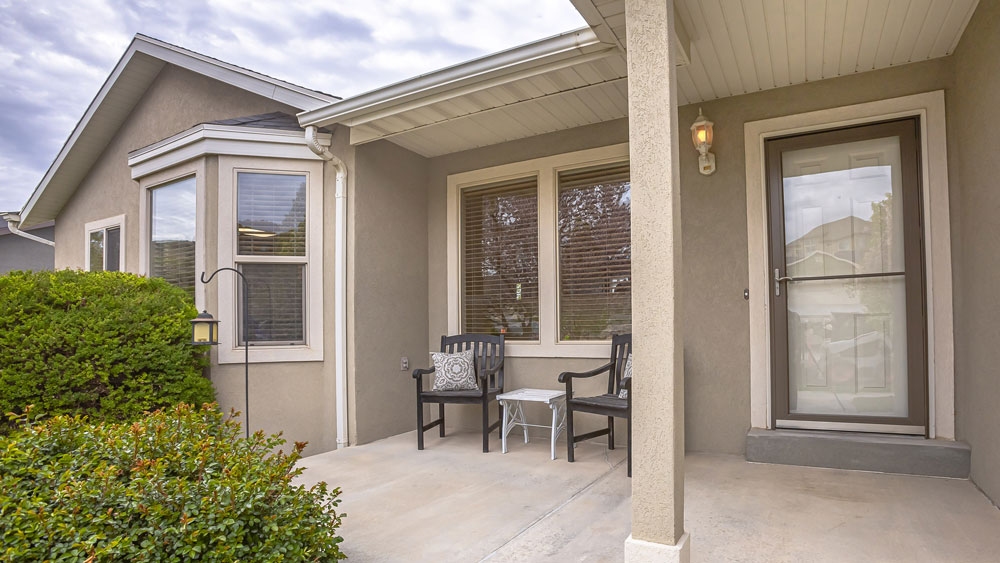
There are many reasons why concrete porches fail over time.
Climatology can have a lot to do with it, and weight distribution on the porch support structure itself can also have a lot to do with it.
More often than not, however, sub-concrete voids are to blame for much of the cracking, sagging, and splitting that concrete porches experience. These voids can take decades to form, in some cases, and they’re almost always impossible to detect until they’ve already caused damage to the concrete above them.
The good news is that mudjacking—a safe, effective method of raising concrete—can restore support to sinking, splitting, or sloping concrete porches. In this blog post, AAA Concrete Raising is explaining how mudjacking is used as a technique to resolve even the most problematic concrete porch situations.
Why and How do Voids Form?
Just about all concrete porches have bare ground beneath them. Sometimes, this ground is compacted before construction of the porch. Other times, it is not.
Occasionally, concrete porches will be built on top of the foundation of the home, which is the preferred method for protecting the porch from damage caused by subsurface voids. However, this is rarely the case for porches that have been ‘added on’ to a home after its initial construction.
Whatever the type of concrete porch, there is bound to eventually be void development. Voids in the ground below concrete porches form for two main reasons:
- Natural shifting of sediment. As the conditions above-ground change—things like temperature, humidity, precipitation, and air pressure—so, too, do things below-ground change. Over a period of many years, sub-concrete sediment can shift and settle, a phenomenon that invariably leads to void development.
- Heavy rainfall and/or erosion. When enough rain falls to produce runoff, that runoff is going to always go in one direction: down. This means infiltrating the area below concrete po犀利士
rch slabs. With enough time and rainfall, it’s a foregone conclusion that voids will appear.
The symptoms of subsurface voids are splitting or cracking of concrete, sloping at the edges of concrete slabs, or sinking of certain areas of the concrete. These symptoms can create tripping hazards, not to mention an unattractive aesthetic.
It’s best to remedy these symptoms sooner than later, as they’re bound to only get worse as the months and years go on.
How Mudjacking Solves the Problem
Mudjacking is a term used to describe the injection of slurry below sinking or sagging concrete as a way to ‘jack up’ the affected slab.
This slurry is simply a sand/water mix that is formulated for the express purpose of supporting concrete. This is very different from the ‘polyfoam’ injections that are often used to rectify settled concrete. With mudjacking, the supporting substance is environmentally and biologically safe, something that can’t be said about many types of polyfoam injections.
In most cases, mudjacking is a much less expensive option compared with removing the affected concrete and replacing it. And, when mudjacking is used in lieu of ripping out the old concrete, the area can return to normal use within just a day or two.
The mudjacking process is as follows:
- Small holes are drilled strategically in the sagging concrete.
- The slurry is injected under very high pressure.
- With enough pressurized slurry, the settled concrete begins to rise.
- Once the risen concrete reaches an acceptable height, pumping stops.
- As a result of these injections, the surrounding soil becomes compacted, helping to prevent more void accumulation in the future
- The drilled holes are filled with concrete patching compound and the project is complete.
For concrete porches that are ‘pitching’ towards or away from the home, mudjacking can be an especially effective option. In just a single visit, a professional mudjacking treatment can completely eliminate issues associated with sagging, sinking, or otherwise unstable concrete slabs.
Is Your Concrete Porch Settling? Call AAA Concrete Raising!
If you’re wondering if mudjacking could be a solution for your sloping, sagging, or sinking concrete porch, why not contact AAA Concrete Raising for a free quote?
We’ll conduct a thorough appraisal of your porch, and we’ll let you know whether or not mudjacking would be an adequate solution for the problem. If we can fix your porch with mudjacking, we’ll schedule the job on a day and time that works best for your schedule.
To get started, contact the concrete raising professionals at AAA Concrete Raising today by calling (303) 526-2222. Your concrete porch will thank you, and you can look forward to spending more time relaxing and barbecuing!
Concrete Porch Mudjacking FAQs
Concrete porches most commonly fail due to sub-concrete voids that form beneath the slab as sediment shifts and settles over many years or as heavy rainfall erodes the supporting soil below. These voids are nearly impossible to detect until they've already caused visible cracking, sloping, or sinking in the concrete above.
Voids develop beneath concrete porches primarily through two processes -- the natural shifting and settling of sub-concrete sediment in response to temperature, humidity, and pressure changes over time, and heavy rainfall that infiltrates and erodes the soil beneath the slab. Both processes can take decades to cause noticeable damage.
Yes -- mudjacking is a highly effective solution for sinking, sagging, or pitching concrete porches, using pressurized slurry injections to lift the slab back to an acceptable height in a single visit. The process also compacts the surrounding soil, helping to prevent future void development beneath the porch.
Mudjacking uses a sand and water slurry that is environmentally and biologically safe, which is not always the case with polyfoam injection products. Mudjacking is also typically a less expensive option, and the area can return to normal use within just a day or two after the job is complete.
Porch settling should be addressed as soon as symptoms like cracking, sloping, or sinking are noticed, as the problem will only worsen with time and can create serious tripping hazards. The sooner a professional evaluates the damage, the more likely mudjacking will be a viable solution rather than full replacement.